Insights from Zee Palm's Team
We talk about products, app development, and next-generation apps.

Top Strategies for Retaining Users in SaaS Businesses
In the world of Software-as-a-Service (SaaS) businesses, user retention forms the backbone of survival and growth. It's reported that a 5% increase in customer retention can contribute to 25%-95% of profits. However, post-acquisition of these users, companies often grapple with the challenge of keeping them engaged and loyal to their platform, thus underscoring the importance of an effective user retention strategy.
The Power of Personalization
First and foremost in the user retention strategy, personalization has shown a significant increase in user engagement and loyalty. Personalization refers to using user data to deliver more relevant communication, services, or product suggestions. A study suggests that 80% of consumers are more likely to do business with a company if it offers personalized experiences. SaaS businesses can leverage AI and machine learning to deliver personalized content and recommendations, enhancing the overall user experience and thus propelling user retention.
Responsive Customer Support
A SIGMA Research report stated that a slow response from customer support is the top reason for SaaS churn. Therefore, having a proactive and responsive customer support helps in cutting churn rates. This can be achieved by reducing the response time, offering 24/7 support, multiple channels of interaction (like email, chat, or even social media), and implementing a ticket management system. By addressing user problems promptly, businesses can enhance their user experience and improve retention.
Regular Product Updates
SaaS companies are unique since they provide services that are constantly evolving, and regular product updates are a cornerstone of this business model. By rolling out new features, fixing bugs, and expanding capabilities, you not only meet users’ changing needs but also show them that you’re continually striving to improve their experience. Transparency about your development roadmap can also build trust with users, who then feel invested in your product's evolution.
Investing in User Education
An involved user is a retained user. Most customers tend to move away from a product or service because they do not understand it fully. User education is not about giving customers detailed guides about your software, but ensuring they understand how to get value from your product. This can include webinars, virtual workshops, or useful content like blogs that guide the users through different facets of the software. Informative and interactive tutorial videos can also help users get more comfortable with the product, subsequently leading to higher retention rates.
Develop a Strong User Community
Creating a communicative network of users through forums or discussion boards can be beneficial for SaaS businesses. These platforms allow users to exchange information, ideas, and provide solutions to each other, fostering a sense of community. Users who feel like they are part of a community are more likely to stay with your software. Additionally, these user communities can also provide insightful feedback and ideas for your business.
Implementing a User-Friendly UI and UX
The usability of software is often a deciding factor for many customers. A complex or confusing interface can quickly discourage customers and lead to increased churn rates. Therefore, offering a user-friendly, intuitive interface and positive user experience (UX) is critical to retaining users. Regularly monitoring user behavior and feedback can help identify any bottlenecks in the user journey and improve the UI and UX accordingly.
Offering Competitive Pricing and Plans
Last but not least, SaaS businesses must offer competitive and flexible pricing plans that cater to a broad spectrum of consumers. While it’s essential to ensure your pricing matches the value you provide, it’s also crucial that users feel your product is affordable. This doesn't mean undercutting the competition but providing various options like monthly or annual plans, scalable plans based on users' needs, and potential for various discounts. Users are likely to stay on if they perceive they are getting value for their money.
In summary, user retention in SaaS businesses is a multi-faceted problem that requires a combined approach of multiple strategies. By understanding user needs and expectations, maintaining open channels of communication, providing excellent customer service, and delivering continuous product improvements, businesses can enhance their user retention and ensure steady growth in the competitive SaaS market. It’s indeed a game of keeping users contented and committed, and these strategies provide a road map towards achieving that.
For custom software development, visit us at Zee Palm
To buy premium front-end flutter kits, visit Flutter Coded Templates
Check out free Flutter Components, visit Flutter Components Library

How to Collaborate Effectively with Developers as a Non-Technical Founder
Being a non-technical founder comes with a significant number of challenges. However, there's no need to worry because you're not alone. Many successful companies are led by non-technical founders. Now, the question that likely crosses your mind is, "What is their secret to success? How did they manage to make it happen?" As a non-technical founder, you definitely have all the ideas planned for your product, but to bring them to life, you need a developer. If you believe you can do it without collaborating with a developer, it's a big misconception.
When it comes to collaborating with a developer, you may struggle and feel at a disadvantage due to the communication barrier. So, in this article, we are going to discuss this issue and find out how to collaborate effectively with developers as a non-technical founder.
Ways to Effectively Collaborate with Developers as a Non-Technical Founder
As a non-technical founder, it can get challenging when it comes to collaborating with developers. But you need handle it in a professional way so that it won't negatively impact your business. A collective effort is a must to meet market demand and to provide a great user experience. Here are some ways you can work efficiently and effectively with developers:
Learn the Basics of Software Development
You can start by learning the basics of software development by that I mean learning basic terminologies and concepts that can help you communicate your ideas more easily with the developers. You need to learn about the different phases of software development such as the planning phase, developing phase, and testing phase. You can watch related videos, read articles, and even listen to podcasts to improve your understanding and clear confusion about anything that is bothering you and holding you back. Use platforms like Reddit and Stack Overflow for research purposes. Join relevant communities and talk with people there to gain insights into areas where you may have gaps.
Be Clear About Your Vision and Goals
You have to be crystal clear about your goals and visions. Before engaging with your developers take some time and work on your product. Think about your product's purpose and how you want your product to be. What features and functionality are a must to have in it? While keeping your target audience and their needs in mind. Use visuals to effectively convey the desired appearance of your app. If you're unable to explain your ideas in words, consider creating sketches. Transform these sketches into wireframes with the help of your developers. Tools like Photoshop and Balsamiq can help you in this process, allowing you to visually communicate your vision to your team. That way it will be easier for you to collaborate with the developers. The clearer you are about your expectations, the easier it will be to explain them to your developers and for them to understand your requirements.
Be flexible and open to feedback
When collaborating with developers, it's important to remain flexible. Everything may not go as you planned but it doesn't mean you have to change your vision or something. It's just you that there might be other optimal solutions for that problem or even better ideas than what you initially considered. Stay open to constructive criticism and feedback while working together. Developers may offer insights that lead to improved outcomes that you may not have considered. Don't hesitate to seek feedback from them and allow them to guide you towards making your app successful. Trust their expertise and be supportive to help them achieve great results.
Communicate Regularly
Communicate with your team regularly don't wait until there is a problem that needs to be fixed. Regular communication is a key to success when you are collaborating so there are no misunderstandings. You should give and get feedback and reviews on a daily basis. Use chat apps, video conferencing tools, and platforms like Trello, Asana, Jira, and Slack, to stay connected with your team members, especially if you are not in the same location. Keep each other updated with the progress and problems that occur during the process. Offer feedback and ask questions to address any confusion, which helps prevent misunderstandings and ensures everyone is on the same page. The more you stay connected with each other, the greater the chances that developers will be able to provide what you asked for.
Be Patient and Trust the process
Developing a software product is a time-consuming process. You cannot expect your team to create an entire product overnight or even within a few days. Software development involves numerous stages, including development, testing, and debugging. To achieve a high-quality product that meets your standards, patience is crucial, and trusting the process is essential. Keep in mind that there may be delays or unexpected issues that need to be addressed and for that patience is required on your part. However, it's important not to allow delays to prolong the process excessively. Be realistic about the required time frame and avoid frustrating your developers. You cannot simply launch your product without completing any of these stages, as it can result in negative outcomes in a competitive market. Therefore, let your developers do their job within a realistic timeframe to ensure the delivery of a successful product.
Don't be afraid to ask questions
As a non-technical founder, there may be times when you're unsure about certain technical aspects. However, don't be afraid to ask questions to clarify your doubts. In a world that revolves around technology, it is important to seek understanding, even if the questions seem basic. Asking questions will provide you with valuable insights and help you learn more about software-related aspects of your product.
Effective collaboration between a non-technical founder and a developer is extremely important as it affects the overall result. It requires mutual respect, trust, and good communication skills. There are many big tech companies that are very successful and have non-technical founders, such as Airbnb, Pandora, and Glossier. Understanding how to collaborate with each other and working together through the process can increase your product's chances of being as successful as that of any technical founder.
For custom software development, visit us at Zee Palm
To buy premium front-end flutter kits, visit Flutter Coded Templates
Check out free Flutter Components, visit Flutter Components Library

Breaking Down the Costs of Mobile App Development
Mobile app development is becoming increasingly popular as people are developing their own mobile apps to increase their market value and attract users, and investors. According to Statista, it is estimated that the mobile app market will reach approximately $613 billion by 2025. But mobile app development is no easy task that can be done within a day and hours. It is a complex process that involves planning, researching, coding, creating wireframe designs, and testing. This process also requires a significant amount of time, money, and resources. We are going to break down the cost of mobile app development and discuss the factors affecting the cost.
Different Costs Involved in the Mobile App Development
When comes to mobile app development the question that arises the most is how much it is going to cost to develop a mobile app. The answer to this question is not a straightforward amount; it varies for everyone based on their mobile app requirements. According to an article based on current trends and market analysis, the average cost of developing a mobile app in 2023 can range from $30,000 to $250,000. Of course, it can be lower or higher depending on the complexity of the mobile app. The cost of mobile app development will vary based on several factors, including the number of hours required, the hourly rate of the development team, available resources, and other things involved. You can read our article on how to make a budget for an app. Let’s see the different stages of mobile app development and the cost breakdown of each stage.
1. The Cost of App Strategy
The first step is to build a proper app development strategy and obviously, it going to cost a certain amount. The average cost of developing a mobile app strategy is $5,000. This includes having a clear vision of what your product offers, what features and functionality it will provide to users, and understanding your target audience's needs. Conduct extensive market research to determine what your competitors are offering, their strengths, and weaknesses. Identify what you can offer that they are not providing. The cost also depends on the complexity of the features your app will have. If you are building a Minimum Viable Product (MVP) for your app, the cost will also depend on that process.
2. The Cost of App Design
Once the app strategy is in place, it's time to move on to app design. App designing involves wireframes, prototypes, user interface (UI), and user experience (UX). Wireframes and prototypes provide a visual representation of the app's layout and functionality. UI involves creating visual elements such as icons and buttons, while UX focuses on enhancing user experience through features like navigation and scrolling bars, ensuring positive user interactions. The average cost of developing a mobile app design is $6,000. However, the cost of the app will vary depending on the complexity of the app design. The more features, the higher the price will be. Apps that have complex and additional features will cost more. For designing the app, a well-experienced designer is required. The prices of the designers vary from place to place. It is important to invest in the app design phase as the first impression of the app matters a lot to make it more user-friendly and appealing.
3. The Cost of App Development/Coding
The most expensive and time-consuming phase of this process is app development which involves the actual coding of the app. Mobile app development phase costs from $10,000 to $100,000. The cost depends on choosing an experienced team of developers. However, it is important to choose a good developer who can provide exactly what you want. We provide high-quality app development solutions at Zee Palm.
4. The Cost of App Testing
The next step is testing the mobile app, which is a crucial step before launching the app. The cost of average cost of app testing is between $2,000 and $10,000.The cost involved here includes testing for bugs, identifying errors, and checking for any vulnerabilities that could lead to hacking or app crashes. App testing is an essential phase, and it's important to allocate a sufficient budget for it. You can also involve some users to test your app. If there is any crash or any other problem that exists it will be fixed here in the testing phase. Otherwise, it will be a huge disgrace for the company if anything happens after the launch, which could negatively impact the company's reputation in the market. We at Zee Palm offer QA testing within the development charges, so you don't need to pay anything extra.
5. The Cost of App Deployment
Once the app is tested thoroughly and approved, it's time for the app to be deployed to any app store. This phase involves submitting the app to the Apple App Store and Google Play Store. The cost here depends on which platform you are deploying the app on. Certain charges for app submission need to be paid. It is important to follow the rules and guidelines otherwise your app can get rejected or fined. The average cost of deploying a mobile app is $5,000.
6. The Cost of App Maintenance
The last step of this process is maintaining the app. It is an ongoing process. After the app's launch, there might be bugs and errors that require fixing. Updates are necessary after taking feedback from users such as adding new features or removing some. Ensuring security is also a huge part, different security updates and measures should be applied so the app won't be vulnerable to hackers. If you choose the MVP approach, the maintenance cost varies as the app continues to develop over time. The average cost of maintaining a mobile app is $10,000 per year. The cost in this phase varies significantly because it is largely based on how your app is developed. For some, the maintenance cost is even higher than the development cost, while for others, it may be rather a small amount.
Ways to Reducing the Cost of Mobile App Development
Here are some ways to reduce the cost of app development.
- Having a clear goal of what your app will provide can help reduce the cost of mobile app development. Once you have a clear goal you can manage to control the budget.
- Building an MVP can help a lot in reducing the cost as you launch the app with essential features and continue to develop it further based on user feedback over time.
- Thorough market research can significantly help as you learn about what your target audience needs and what your competitors don't provide.
- Don't overcomplicate your app, minimize the number of features and functionalities, and only include those that are essential and desired by users.
- Outsource development to a low-cost country can save you a lot of money but it is important to choose the right company and developers to ensure you don't get low-quality work.
For custom software development, visit us at Zee Palm
To buy premium front-end flutter kits, visit Flutter Coded Templates
Check out free Flutter Components, visit Flutter Components Library

Designing A User Friendly Mobile App
It's a little shocking to see that despite the overwhelming number of apps available, many still lack the fundamental components of effective design. Who hasn't downloaded an app only to quickly uninstall it after seeing that every button on the home screen is malfunctioning?
The user experience (UX) of an app is directly impacted by its features, so if it's sluggish, challenging to use, or doesn't respect user privacy, it will be rapidly deleted in favor of a better one.
In this digital life, designing a mobile app is not only necessary but also has many advantages in our life. User experience, engagement, and business growth can all be boosted by a well-designed mobile app. To achieve this level of user-friendliness, a thorough understanding of user behavior and preferences, thoughtful planning, and thoughtful design are necessary. We'll go over the fundamental ideas and techniques for creating a user-friendly mobile app that stands out in the market today.
1. Data security and privacy
Security and privacy are two of an app's most important aspects because they work hand in hand. Since most applications hold sensitive information like credit card numbers, customers won't use an app if they don't feel confident that the app will protect their data. Even worse, there's a chance that they won't trust the company as a whole. Therefore throughout the whole development process security must be given top importance.
Transparency is important in user privacy considerations. Make sure your app can notify users about privacy-related issues, such as erroneous logins to their accounts. Once users are aware that you value their privacy, they will begin to trust and positively recognize your brand.
2. Search Box
The most frequently disregarded element of a mobile app is the search option. Even if your software is easy to use, not all users can find what they need by navigating it. Users can quickly get the precise information they need using search bars so that they can't just swipe away from your app and go to Google. By lowering turnover rates and promoting quick and simple navigation within your application, features like a search box help keep people on your application.
3. Responsive UX
To be user-friendly, an app needs to offer an inbuilt user experience (UX). The software should be intuitive enough for the user to use without thinking. If your app is difficult to use, users will get frustrated and switch to other apps. Simplicity, responsiveness, and accessibility across various screen sizes (phones and tablets) and OSes (Android, iOS, and Windows) should always be prioritized in an app's user experience (UX) design.
Since the majority of users will access your app on a mobile device, it is also crucial to prioritize mobile-first design.
4. Availability
The importance of accessibility in design has increased for the user experience. Being accessible means taking into account users with special needs who might use technology in a non-typical way. Two characteristics of an app that are particularly noteworthy in terms of accessibility are:
Scalable Text
Enabling scalable text is a best practice for accessibility, particularly for people with visual impairments. Remember that each user will have a unique experience with your software. Their UX and perception of your brand will both improve if they have access to scalable text. If you respect the user's system-level settings, you won't need to introduce in-app options.
Automatic Speech Recognition
For users with visual or other disabilities, including screen readers or automatic speech recognition devices, effective HTML incorporation is an important factor. This not only makes your design more approachable to a larger audience but also distinguishes your app as universally user-friendly.
5. Customizable Push Notifications
When used effectively, push notifications can increase user retention and re-engagement. Push notifications must only deliver information that the individual user is interested in, such as time-sensitive sales, product restocks, updated features, and other relative news.
Take care not to overburden the user's notifications with pointless, unwanted messages. These notifications will annoy users and make them feel intrusive, which may cause them to delete the app. Additionally, offering customers the opportunity to turn off some messages through customization options can increase customer satisfaction.
6. Opt-Out of Data Gathering
Data collection opt-out is a natural extension of the fact that data security and privacy are essential mobile app features. You build a foundation of transparency and trust with users by giving them control over their data, two qualities that are crucial to a long-lasting connection.
7. A Feedback System
A feedback system is one of the most important features of an app. If you give users a simple means to interact with you then you will have direct access to the user's wants, requirements, and concerns. Incorporating methods for users to leave feedback will help you iterate your app more effectively and make it easier to enhance it moving forward. This knowledge will help you strengthen your communication with your audience as well as the app itself.
8. Synchronization Among Multiple Devices
Real-time device synchronization is a feature of mobile apps that many people find interesting. Users frequently start a procedure on their smartphone only to discover that it would be simpler to finish on another device. One of the features of an app that defines what makes an app user-friendly is the inclusion of multi-device syncing.
9. Battery Maintenance
Although there are many useful and entertaining mobile app features to choose from, it's always necessary to take battery life preservation into account. A user will either use your app less or delete it entirely if your program has a significant negative impact on battery life. Therefore, make sure your app is executing processes and has a design that doesn't slow down a user's device.
For custom software development, visit us at Zee Palm
For free premium front-end flutter kits, visit Flutter Coded Templates
Check out free Flutter Components, visit Flutter Components Library

How to Effectively Budget Your App
Since personal finance applications have been in high demand for a while, the global epidemic has only increased peoples' awareness of their financial habits. The need for financial applications and innovation in the sector is also growing as Gen Z enters adulthood as the first generation to find using technology fully natural in all parts of their life.
Personal budgeting apps generally aid users in managing their expenditures and savings. That said, the market has expanded to the point where we now see finance apps catered to the specific requirements of various groups, including those dealing with economic instability, those keeping track of their savings and investment performance, and groups like couples, families, or groups of friends who split expenses, among others.
A native mobile app typically costs between $50,000 and $100,000 to produce. Small business owners believe they cannot afford to develop their mobile apps. App development does come at a hefty price. However, that does not imply that smaller companies cannot afford them. Within their means, anyone can design a mobile application.
Let's discuss how we can make a mobile application within your budget. But firstly we’ll see what goes into a development budget. Businesses must comprehend the elements that contribute to a successful mobile app to build a reasonable app development budget.
The costs associated with developing a mobile app include the following procedures:
1. App development:
It is the term used to describe the real labor required to create the end product. Building the minimal viable product (MVP), adding new features or connectors, and other aspects of the backend work are all considered development components.
2. App design:
A successful app depends on the user experience it provides. To provide customers with a user-friendly app design, choices must be made regarding color schemes, typography, layout, and other factors.
3. Operating System Decisions:
Making decisions about the operating system for your mobile app will have an impact on many of the budget discussions you have. Are you developing an iOS app? Android? a multiplatform application?
These are some of the factors that have been measured and associated with the budget. Now let's discuss how to effectively budget our app.
1) Determine what your company can afford:
Any budget should start by examining your organization to see how much money it is willing or able to spend. Because your organization is investing money in areas other than a mobile app, it is necessary to prioritize those costs and cut the budget accordingly. Once you know what your average cost will be for your budget, you can look at what you can afford to spend money on. If you're designing a mobile app for the first time, this procedure will probably require a few iterations. Researching the state of the market is essential because the price of app development changes depending on several variables. You could need to use funds from other areas or stop your mobile app creation, depending on how important it is. Even though all of these are entirely common, you can still make plans regardless of how the audit turns out.
What kind of mobile app your business wants might be the first step in determining how much it will cost to develop one.
2) Type of Mobile Applications:
Mobile apps can be classified into three categories. Investigate these alternatives as a crucial component of your budget planning for app development:
Native apps
Apps that are natively designed for a single platform or operating system. The speed of these apps is a benefit, but if you decide to create an Android version of your iOS app, it will take more time, effort, and funds to replicate the original procedure.
Web apps
They can be accessed using a web browser and are similar to native apps. Because it is web-based, less customization is required, which lowers the cost of development. However, the use and support of browsers are necessary for online apps.
Hybrid apps
An online app that has been converted to a native app format. Hybrid applications are used by several prosperous businesses, including Uber and Gmail, for their mobile apps. They enable support for multiple operating systems at a more cost-effective price point than multiple native apps. Zee Palm has years of experience with hybrid app development, contact us to discuss your project.
Choose a mobile app type that best serves your target market and your business objectives.
3) Maintain command over UI/UX design:
A better user interface will result in a better user experience. However, selecting a more appealing and adaptable design alternative could raise the total cost of development. If you wanted to save money, you could use the standard design. Keep in mind that you may always expand the functionalities of your app.
As you get user input, you can improve the app's usability and add new features. This is due to the fact that excessive design spending is unnecessary during the app's testing period.
Keep in mind that complicated designs will only make your app's users more complex. Therefore, it is preferable to create a configurable design after receiving appropriate input.
4) Get Rid of Push Notifications:
What if we told you that eliminating one feature might reduce your spending by 30%? That much is true. An app costs more the more features it has, but some of these features require ongoing maintenance, which raises the cost.
This is why:
- Push Notifications need constant upkeep.
- App expenditures are sometimes increased by 10–30% by push notifications.
- Most users don't need or desire push notifications unless they're essential.
Of course, Push Notifications are sometimes required. Push Notifications would be useless if you run a pharmacy and your mobile app is designed to notify consumers when their medications are available.
5) Do Some Competition Research:
Browse the app/play store to see what products your rival offers. Examine some of their foundational elements to determine how you may strengthen your messaging to engage clients more effectively. It is also vital to keep in mind that these rivals don't always have to work in the same field as you. You can browse applications with similar functionality to understand how they operate.
To find these programs, use an online search or look through the Apple or Google Play store's chart rankings. From there, you can examine a description of their features and even browse through customer testimonials to learn what other people are saying. Your team can take note of any criticisms of a competitor's app that emphasize its lack of complexity in your research, which will directly affect the cost of developing your own app.
6) Selecting your features:
Think of the top features that will offer your clients the greatest value as you create your budget.
Wearable device compatibility (92%), voice search (90%), and machine learning (90%) were reported to be the characteristics that small businesses found most gratifying in a 2022 report on the Manifest.
These may appear to be sophisticated features that are outside the scope of your app development budget, but that isn't always the case. More features aren't always better; instead, a user-friendly UI will improve their experience with your program. Consider the kind of program you want to create and the functionalities that make sense.
For instance, push notifications may be a good idea if you're creating a social networking or delivery app to keep consumers updated. However, if you're a startup creating simple communication software, you might not require functionality like chat buttons and user profiles. Considering which features truly make sense can help you save money in the long run because users will become disengaged and leave your app if its interface is crowded.
7) A Hybrid Mobile App Will Save You Money
You're paying for two apps instead of one since many companies who generate apps have to make versions for both Android and iOS.
Build a hybrid mobile app to save money. Hybrid applications combine features of both native and web apps. They are typically easier and faster to develop than native apps. They also require less maintenance. They are not as expensive as as native apps as they nonetheless reduce your costs by 30–40%. Zee Palm has years of experience with hybrid app development, contact us to discuss your project.
For custom software development, visit us at Zee Palm
For free premium front-end flutter kits, visit Flutter Coded Templates
Check out free Flutter Components, visit Flutter Components Library

5 Hot Trends in Mobile App Development
Are You Excited About The Future Of Mobile App Development?
Do you ever wish that your mobile apps could do so much more? The year 2023 is shaping up to be a big one for mobile app development. The next generation of mobile app development is here, it’s all about creating more interactive, intelligent, and immersive apps.
The rising popularity of new trends such as AR/VR, 5G, AI, and much more will change how we interact with technology. Businesses that want to stay ahead of the game need to have a clear vision of the future.
Trends in 2024
Augmented Reality (AR) and Virtual Reality (VR):
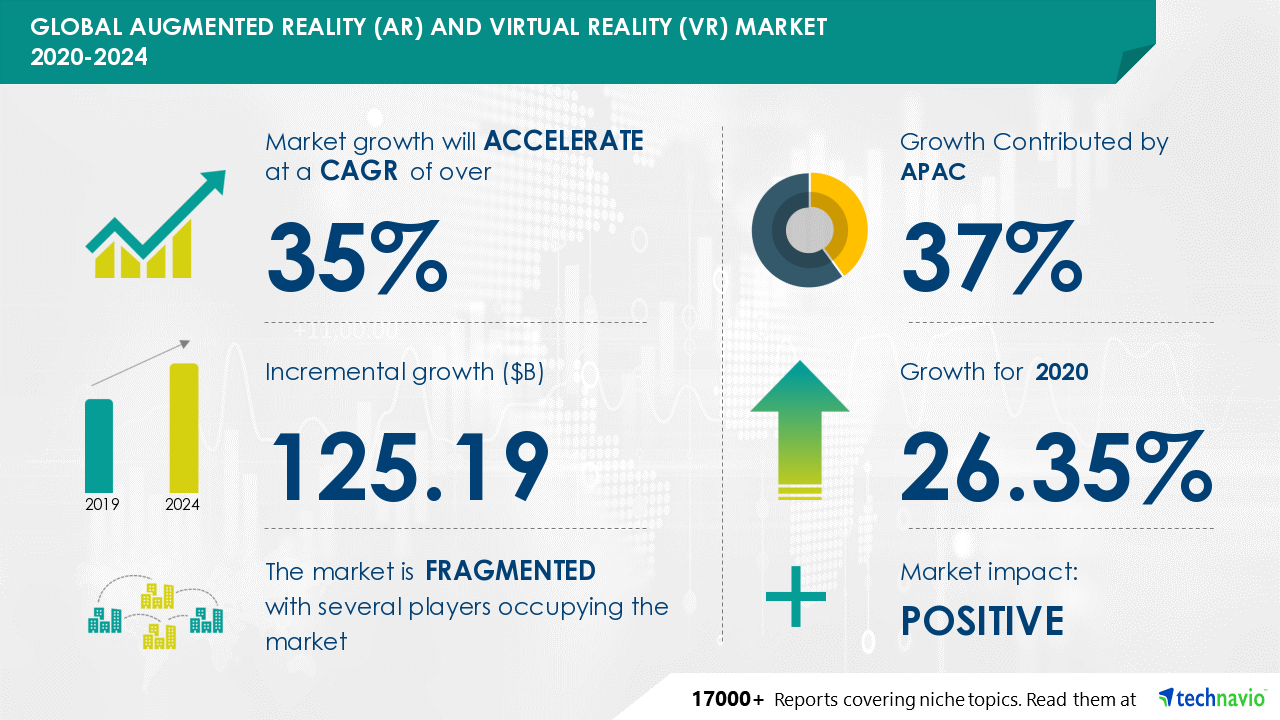
Have you ever wondered what it would be like to fight a dragon or explore new places without leaving your couch? Thanks to AR/VR technologies these experiences are possible. AR allows users to overlay digital information in the real world, while VR creates a completely immersive experience. AR and VR are two of the most exciting technologies in mobile app development. They have the potential to revolutionize the way we interact with the world around us. Technavio’s research predicts $125 billion growth in the global AR/VR market in 2022-2024.
Examples
AR/VR can be used in a wide range of industries.
Gaming: There are several AR/VR games available, such as Pokemon Go and Beat Saber. These games allow users to interact with digital characters and objects in the real world.
Healthcare: AR and VR can be used to train medical professionals or to provide patients with therapy. For example, surgeons can practice procedures before performing them on real patients.
Retail: AR/VR can be used to help customers visualize products or to provide them with a more immersive experience. For example, Makeup brands have introduced virtual try-ons, making online shopping easier.
AR/VR is still in its early stages and many challenges and limitations come along such as the high costs of AR/VR devices, limited content, and the need for extensive hardware, etc. But it can potentially transform the mobile app market.
Artificial Intelligence (AI):
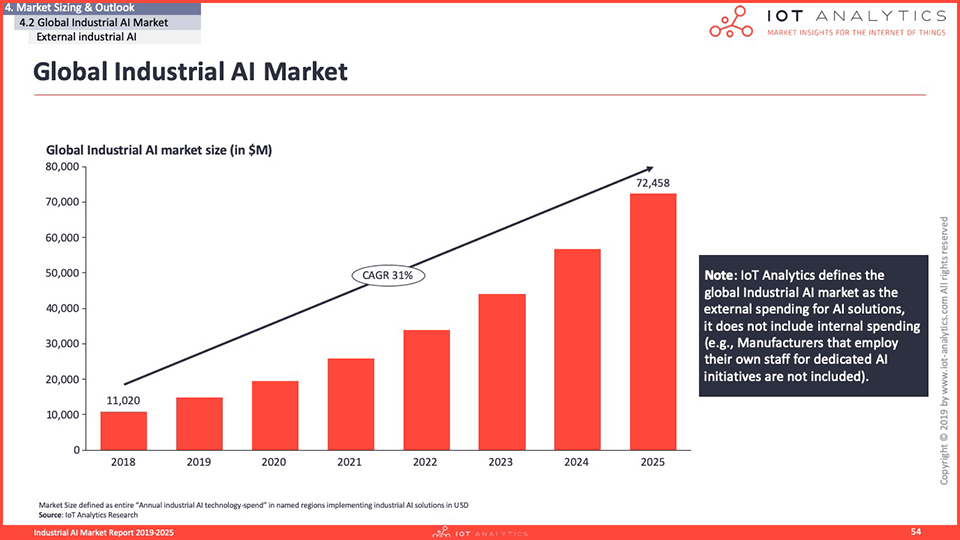
What if your mobile apps could learn from your behavior and predict what you need before you even ask? AI is a rapidly growing technology, and it's having a major impact on mobile app development. AI can be used to automate tasks, personalize user experience, provide better data analytics, and so on. It is a valuable tool for developers to create more efficient and user-friendly apps. According to IOT analytics, the CARG of Global Industrial AI market size is expected to grow by 31% by 2025.
Examples:
Chatbots: Chatbots are AI-powered programs that can stimulate conversation with humans. They are often used in customer service apps to answer questions and provide support.
Personalized Recommendations: AI can be used to recommend products, services, or content to users based on their past behavior. This is commonly used in e-commerce apps like Amazon.
AI is still a relatively new technology and the cost of maintaining and developing AI is very high, but it has the potential to reshape the app development industry. By automating tasks, and improving the accuracy of predictions. As the technology continues to develop, we can expect to see even more exciting and ground-breaking AI-powered mobile apps.
Internet of Things (IoT):
The Internet of Things refers to the network of physical devices that are connected to the internet. These devices can collect and share data, which can be used to create more intelligent and connected mobile apps. The global IoT market is expected to reach $1.9 trillion by 2025. It can be used to create healthcare applications. IoT can be used to monitor patient’s vital signs, and medication intake and provide remote care. It can also be used in manufacturing applications to improve efficiency or productivity. IoT can be used to monitor equipment, track production data, and optimize supply chains.
Examples:
Smartwatches: Smartwatches collect data about the user’s heart rate, steps taken, and sleep patterns. This data can be used to give personalized fitness suggestions.
Home Appliances: Home appliances such as thermostats, security cameras, and lights can be connected to the internet. This allows users to control these devices remotely or to receive alerts about their status.
IoT is a swiftly growing technology. By connecting physical devices to the internet, it can create intelligent and connected mobile apps that can enhance our online experience.
Cloud Computing:
How can you create an app that can handle millions of users? Cloud computing is revolutionizing the way mobile apps are developed. By storing and processing data and applications on remote servers, cloud computing can free up space on mobile devices and improve the performance of apps. It can improve the performance of mobile apps by up to 30%. Many companies provide cloud computing services such as Google Cloud, Amazon Web Services, Microsoft Azure, etc.
Examples:
Game Development: Cloud computing can be used to store and process data and graphics for games. This can free up space on mobile devices and improve the performance of games.
E-Commerce: Cloud computing can be used to store and process the data for e-commerce apps, improving their performance and making them more scaleable.
Cloud computing is a powerful tool that can help mobile developers build better, more performant, and more scalable apps. This allows users to have a smooth experience without having extensive hardware.
Blockchain:
What if you could make transactions without a bank? Blockchain is a distributed ledger technology that allows secure, transparent, and tamper-proof transactions. This makes it a promising technology for mobile app development, especially for apps that need to monitor transactions or manage sensitive data. The global blockchain market is expected to reach $23.3 billion by the end of 2023. Decentralized applications run on blockchain networks, they are not controlled by any central authority which makes them more secure and transparent. Smart contracts are self-executing contracts that are stored on a blockchain network, they can be used to automate transactions and reduce the need for intermediaries.
Examples:
Voting Apps: Blockchain technology can be used to create secure and transparent voting systems. This can help to reduce fraud and increase voter participation. VotingWorks is a blockchain-based voting platform being used in Estonia.
Financial Apps: Blockchain can be used to track financial transactions, such as payments and loans. Everledger is a blockchain-based platform that tracks diamonds from the mines to the jewelers, helping to ensure that the diamonds are not mined illegally.
Blockchain is still in its early stages of development, It has a high cost of implementation but it is a technology to watch, and we can expect to see even more innovative and exciting applications of blockchain in the years to come.
Conclusion:
Mobile app development is continuously evolving, and the future looks promising. In the years to come, we will see these trends and many others making mobile apps more intelligent and interactive. With AR/VR bringing imagination to life, AI anticipating users' needs, IoT seamlessly weaving the physical world into digital, cloud computing providing us with a smooth experience, and Blockchain technology securing our data and assets the possibilities are endless. The question here is: How are you going to use these trends to reinvent the mobile experience for future generations?
For custom software development, visit us at Zee Palm
To buy premium front-end flutter kits, visit Flutter Coded Templates
Check out free Flutter Components, visit Flutter Components Library
User Data Security in Mobile Apps: Role of Blockchain Technology
In this blog, we will explore the effects of Blockchain technology on mobile apps, mainly focusing on how it improves app security. To understand this we first need to know what Blockchain is. Blockchain is a method of storing data that makes it difficult or even impossible to alter, hack, or manipulate the data. It stores the data in a block that is connected to other blocks in the form of a chain through peer to peer-to-peer connection. This storage structure can also be referred to as a digital ledger. It's basically like a Google spreadsheet with data transactional records in it which is shared among a network of people. The best part is that everybody can see the data in blockchain but they cannot alter it or destroy it.
Blockchain technology is being adopted by many sectors and getting popular by every passing day. Health, banking, real estate, education all these sectors and many more are already affected by this technology. According to an article By 2030, the market for blockchain technology will be valued at $1,431.54 billion, expanding at a CAGR of almost 85.9%. Hence the future of data security is blockchain, and mobile applications are no exception.
Furthermore, the most recent developments see blockchain as a safe database that any mobile app may use. To maintain track of transactions conducted by several parties and to provide these transactions to all parties involved, the technology is being used as a decentralized ledger. This enhances the app's security features and system transparency.
How Blockchain Can Secure User Data in Mobile Apps
The use of mobile apps is increasing drastically, and mobile apps are becoming a part of our daily lives. However, many apps in the market are facing issues related to the security of the application. As we know for the user privacy matters the most and for the developers, the user matters the most. So due to a lack of security user’s data and information is vulnerable to many malicious attacks which can cause distress to the users and thus the downfall of the application. This is the part where Blockchain technology comes in as a hero to save us all.
Immutability
Blockchain is a system for storing data in the form of a chain across a network of computers. Data cannot be altered or destroyed after it is added to blocks on the blockchain, making it hard for hackers to do so. Every new block includes a reference to the prior block because of how the blockchain works. Because of this, even if the hacker succeeds in corrupting the data of a single block, he or she will still need to change the data of every other block, which is practically and logically impossible.
Transparency
Being a transparent ledger, the blockchain decentralized system allows all transaction data to be visible to all the users in the network and all the data records to be recorded. Every party in the network has real-time access to the ledger this aspect gives control to the users for their data and allows them to see how their data is being used. Moreover, due to the transparency of the ledger, no party can alter data in the block without getting caught, as it is easier to track and audit transactions that prevent fraud and corruption.
Decentralization
Information in a decentralized blockchain is distributed among a network of computers, computers each called a node. To prevent a single node from having control over the blockchain's data all the nodes are provided with a complete copy of the blockchain. It is highly difficult for any malicious actor to jeopardize the data and alter the integrity of the system. Therefore, no one entity has control over it. So there is no single point of failure, it is more resistant to attack.
Security
Strong cryptography is used by the blockchain to protect data. Your users will be able to save, access, and manage all the transaction-specific data and information in one location by employing cryptography to assign private keys to the users. This indicates that data is encrypted and that only authorized users can decrypt it. By doing this, you can guard against unauthorized access, alteration, and loss of data.
Privacy
The owners of mobile apps can move the danger of hacking to the Blockchain by keeping the DNS entry there. Without the consent of the users, even the government cannot access the distributed, transparent DNS that the technology delivers. By encrypting data and only allowing authorized people to access it, blockchain is used to maintain user privacy. This might assist in limiting unauthorized access to private information like financial or medical records.
Examples of Blockchain-based Mobile Apps
Now we will learn about some apps that use blockchain technology for their data.

1. MediLedger
Tracking the transportation of prescription medications is done using the blockchain-based platform MediLedger. By doing so, you can guard against fake medicines and guarantee the efficacy and security of your prescriptions.

2. WeTrust
WeTrust is a peer-to-peer lending network built on the blockchain. This can make it easier for customers to obtain loans without going via a conventional bank.

3. Walmart
Walmart is tracking the flow of food goods across its supply chain using blockchain. This can support ensuring the food's safety and quality.

4. Trackr
The platform Trackr uses blockchain technology to track the movement of assets. Loss and theft can be avoided in this way.
Blockchain will increasingly be incorporated into mobile apps across a variety of industries in the upcoming years. This will provide the companies with extremely secure mobile solutions.
Before blockchain can be extensively used in mobile apps, there are still a few issues that need to be resolved. The high cost of development, the ignorance of users, and the lack of regulatory clarity are some of these difficulties. Despite these challenges, the advantages of blockchain in mobile apps are substantial. In the upcoming years, we may anticipate seeing an increase in the number of blockchain-based mobile apps created and used.
For custom software development, visit us at Zee Palm
Free free front-end flutter kits, visit Flutter Coded Templates
Check out free Flutter Components, visit Flutter Components Library

Future of Augmented Reality in App Development
In this blog, we will learn about the technology that is becoming more popular and finding its way toward the mobile app development process. AR “Augmented Reality” is a technology that merges reality with the digital world. It enhances our physical world with the help of digital elements, sounds, and other sensory effects. Unlike Virtual reality, instead of creating a digital world for the user, it adds 3D details to the physical world. Therefore, it is either used to change the natural environment or provide useful information to users. To better understand AR, you should know the application that is being used by millions of people all over the world “Snapchat” with its amazing filters like cat ears, makeup filters and so on is an example of AR technology.
Thomas Caudell, a researcher at Boeing Computer Services Research, first used the phrase "augmented reality" in 1990 to describe how electricians assembled intricate wiring connections using head-mounted displays. The yellow first down marker that started showing up in football games broadcast on television sometime in 1998 was one of the first commercial uses of augmented reality technology.
Since its early stages, AR has advanced significantly due to the evolution in technologies like the rise of smartphones with high-resolution displays, Advanced camera photography features, voice recognition systems, GPS (global positioning system), touch screens that are making tasks easier and modern sensors have increased the accessibility of AR.
How does AR work?
- Sensing: AR technology as discussed earlier combines the physical world with the digital world for this to happen it must have a model of the physical world which can be made with the help of sensors like GPS, cameras, gyroscopes, etc.
- Modelling: After receiving the information about the physical world through sensors, this information is used and designed to develop a 3D model of the physical world for the machine to understand, it also has many more features.
- Enhancing: Now in this step, the action occurs where the two worlds merge and this is done differently according to the software like from giving yourself a makeover through Snapchat filters to using AR technology to get a demonstration of complete interior design for your new house.
- Display: Finally the result of the model is shown to the user through mobile phones or other devices.
What are the benefits of AR?
The advantages of Augmented reality are numerous and diverse. From enhancing productivity and efficiency in the industry to reshaping our whole world like how we learn, travel, and interact with others. Companies in industries as varied as real estate, banking, and healthcare have requested AR layering and augmentation for apps they are building, demonstrating how AR is already having an impact on app development throughout the world. Contrary to virtual reality, augmented reality is more widely available and doesn't call for any additional purchases from users. Now let’s see some benefits of AR that have revolutionized our world.
- Competitive Differentiation: Augmented reality can make your apps stand out in this market without following the current trends it is difficult to survive so AR can connect with users, gain their trust and provide them with an experience that they have never experienced before. See it in Your Space, a function of the Target retail app, allows users to snap a photo of a room in their house and virtually view an object, such as a chair or a picture on the wall, or even change the color of your wall to see how it would appear there.
- Increased Engagement: AR merges the two worlds physical and digital which enhances user engagement by providing interactive and memorable experiences that draw interest, and pique curiosity for example The Measure app for Apple iOS allows users to select two or more locations in their environment and measure the distance between them by using it as a tape measure.
- Improved Learning and training: As AR provides more interactive and realistic models it can help users to train better and learn new things more rapidly. This can be done by adding instructions and visual objects to the physical world through augmented reality. For example, Google Translate shows translation overlaid on the real physical world.
- Reduced Cost: AR can be used to reduce costs as it makes learning and completing tasks easier and they can be done more accurately and quickly. Workers can get real-time instructions and directions via augmented reality (AR). Airbus has created an AR app that helps train technicians to repair aircraft without making mistakes with the help of instructions this task is made easier, and quicker and reduces cost as there is no need to train them anymore.
According to an article, it is said that In 86% of cases, a smartphone was the first device people used to encounter augmented reality.
What are the challenges of AR?
Augmented reality is a rapidly evolving technology but like every other technology it also faces some challenges:
- Hardware limitations: The range of AR technology is still somewhat constrained by the price and mass of current AR devices. Additionally, the technology demands a lot of computing power, which can quickly deplete batteries.
- Accuracy and precision: To overlay virtual items appropriately, AR devices must be able to precisely track the user's location and orientation. In demanding circumstances like the outdoors or busy locations, this may be problematic.
- Content creation: Creating content High-quality AR takes time and requires specialized knowledge. The variety of AR applications that are offered may be constrained as a result.
- User experience: It might be challenging to utilize AR for long periods since it can be distracting and unsettling. To reduce these problems, designers of AR experiences must be vigilant.
The Future of AR Mobile App Development
Mobile app development has been able to enhance engagement and reshape its value in the world with the help of AR augmented reality and will continue to do so in the future. Furthermore, it is expected that AR technology will probably take mobile apps to the next level with their advanced technology. According to an article it is expected that AR market value will surpass 50 billion dollars by 2024. Here are some advancements in augmented reality that will impact mobile app development in the coming years.
- Hopefully, in the future, it is expected that with evolvement in the tech world graphics, motion sensors, and positioning systems will become more advanced, and then it will be possible to portray a world that is a combination of digital and real-world but now with more realistic experiences.
- Many industries are benefiting from AR but with evolvement in it further on in the following years, it is expected to grow in all directions causing widespread adoption in manufacturing, retail, healthcare, tourism, education, real estate, and retail, etc.
- Haptic feedback technology is being developed for headsets of AR technology. This haptic feedback is the ability to feel touch sensations in the real world.
- Eye-tracking technology is being developed to make AR work more efficiently. This ability can track the user’s eye movements. In this way, it will be able to respond according to the user’s gaze.
- The future of AR also includes its enhanced accessibility thanks to no-code development platforms. Platforms like AppMaster.io will be essential in decreasing the entry barriers for producing AR experiences as the demand for AR-enabled apps increases. These no-code platforms allow even non-technical people to create, distribute, and maintain AR apps without having to have a deep understanding of programming.
- AI makes AR work. AI can be used to recognize and track objects in the real world. This allows AR applications to overlay virtual objects on top of real objects more accurately and realistically. AI can be used to understand natural language commands. This allows users to interact with AR applications using voice commands, which can be more convenient and natural than using touch controls.
It's just the beginning of augmented reality in this world, The future is bright in mobile app development. As discussed earlier AR is a powerful technology that has revolutionized the world around us. AR technology is advancing every day with improvements in hardware and software. Developers of AR mobile apps will have the chance to work with organizations and other developers to produce more intricate and immersive AR experiences. If you are a mobile app developer it’s an amazing opportunity for you to learn and involve AR technology into your applications.
For custom software development, visit us at Zee Palm
For free premium front-end flutter kits, visit Flutter Coded Templates
Check out free Flutter Components, visit Flutter Components Library
Top 10 Mistakes to Avoid in Mobile App Development
In this digital era, it is not surprising that the mobile app development industry is booming. Businesses are developing mobile apps to improve their online presence. But what are the chances that your mobile app is going to be a success and not a huge flop? What are the things that ensure that your app survives in the competitive market and is worth investing your money in? According to an article, it was also discovered that the average app loses 77% of its daily active users within the first three days after installation. Developing a mobile app is not an easy task, it involves numerous challenges, risks, and the possibility of failure. In this story, we are going to find out what are the 10 basic mistakes to avoid in mobile app development.
Here are the 10 must-avoid mistakes in mobile app development:
1. Not Having Clear App Goals
Before developing your app, you must have a clear vision of what your app will provide to users. Are the features on which the app is being developed good enough to start the development process? Having a clear objective for your app is essential. Without a strong foundation, you risk creating an app that lacks direction and fails to satisfy your target audience. This can lead to problems even after the app is launched. Therefore, it is crucial to have clear goals for what your app will offer before beginning the development process and launching the mobile application.
2. Not Enough Market Research
One of the biggest mistakes in mobile app development is not having enough market research before launching the app. It is an important step as it allows you to have a clear vision of your target audience's needs. It helps to determine if your app will offer features to customers that others in your domain are not providing. Failing to learn about your competitors' app strengths and weaknesses can result in features that are already available to the customers and are better. That way your app is going to be a huge failure and people will not use that. So you must thoroughly have enough market research about all things including your competitor's strengths, their audience, your target audience, and your app's unique selling points that can create hype and distinguish it from the competition.
3. Not Building an MVP
Not building an MVP for your mobile app is an underrated problem. An MVP stands for a minimum viable product, it is an early version of the app with all the essential features that a user needs. Developing an MVP and launching it earlier is a great way to lower risks and chances of failure. With the help of early users, you can develop your app over time making it more user-friendly. This can help you avoid developing features that users don't need or want. On the other hand, if you skip building an MVP, you may end up spending years of time, money, and resources on an app that ultimately turns out to be unsuccessful, which is a huge mistake. Get in touch with us and get your MVP in 30 days with our Zee Palm.
4. Estimating the Wrong Budget
It is important to have a realistic budget in your mind while developing a mobile app. Mobile app development can be expensive as you have to consider all the factors such as development cost, marketing, wireframe cost, team budget, and other stuff. So don’t underestimate or overestimate the budget by including all the unnecessary features in your app. You must have a properly planned budget for your app so you don't waste money and resources on something unnecessary.
5. Designing a Poor Wireframe
A wireframe is a visual representation of the interface of the app. Designing a good user interface is extremely important for success. Don't overcomplicate your app with unnecessary features like time-consuming loading animation. People like to use apps that respond quickly without taking time. A poor UI/UX can make your app difficult to use and understand. It will eventually lead to the uninstalling of the app. You must have a good and easy-to-understand app.
6. Not Testing the App
Nobody wants to use an app that is too laggy and has errors while using it. That is why thoroughly testing your app before launching it is extremely crucial. It involves testing the app on different devices, with different operating systems and networks. Implement proper phases of different tests on the app so that there are no errors, lagging, or crashing problems. You should provide your users with a good first impression so that they continue to use the app.
7. Not Taking User Feedback
One of the mistakes in development is also not taking feedback from your audience. If you are not aware of their needs and what they want in the app to be included you are going to lose users. Making your app user-friendly is the biggest goal. Feedback from the user helps a lot in the development and improvement of the app. So, I suggest regularly taking feedback and implementing them for better results.
8. Unplanned Marketing Strategy
Once your app is developed, you need a proper market strategy to advertise it to your target audience. Not having a market strategy is a big problem. What's the point of developing the app if you are not going to promote it in the market in the right way? Before launching your app have a proper discussion with your team about how to strategically promote your app into the market so that you gain more users, investors, and stakeholders. You can promote your app through different social media platforms, emails, and paid advertisements. The first impression of the app matters a lot, failing to properly market your app to the customers can result in losing early users and achieving only a limited amount of downloads.
9. Security Oversights and Not Updating Your App
Hackers can target your mobile app so it is necessary to take security measures seriously. It can be done by measures such as user authentication, verification through the mail, and encryption. Failing to maintain security measures can expose user data to the public which could end up in losing user's trust, market value and and serious legal consequences. It is also important to keep your app updated and according to user needs. Keeping the app up to date not only fixes bugs and lowers the risk of hacking, but it also provides users with new features, ensuring they have the best user experience.
10. Overlooking Mobile App Monetization
Overlooking monetization can prove to be a significant mistake. Failing to incorporate a monetization plan can lead to missed profit opportunities and jeopardize the app's long-term ability to sustain itself in the market. Without a clear strategy, you may struggle to cover development and operational costs, as well as struggle to generate funds for future updates and improvements. You can implement monetization through advertisements, in-app purchases, premium features and other paid options. According to an article, In-app advertising is the most common monetization strategy for mobile apps, accounting for 60% of all revenue. Monetization is important as it not only generates the financial resources required to increase revenue over time. A real-life example of this is Candy Crush Saga which is a freemium game that generates revenue through in-app purchases. Players can buy power-up items like jellyfish candies, lollipop hammers, free switches, and many other special candies.
For custom software development, visit us at Zee Palm
To buy premium front-end flutter kits, visit Flutter Coded Templates
Check out free Flutter Components, visit Flutter Components Library
.png)
How to Choose the Right Platform for Your Mobile App
Mobile applications have become an important aspect of our daily lives in the current digital environment. There is an app for practically everything, from productivity to e-commerce, health to entertainment. As a result, choosing which platform to target when creating a mobile app is a crucial decision.
In this era of technological innovation, looking for the best platform is similar to looking for the right key to open a treasure box full of possibilities. The choice is not just about software for developers and business owners; it's about knowing your audience, foreseeing trends, and creating a memorable user experience.
Recognizing the Environment
There are numerous well-known platforms for mobile apps. Some of the most popular platforms are:
Apple's iOS:
Apple gadgets, such as the iPhone and iPad, are run by iOS. It is recognized for offering a superior user experience, having powerful security features, and having a tightly regulated app environment.
Android:
The majority of non-Apple devices run on the Android operating system. The big app market and versatility of Android are well recognized.
Windows Phone:
The operating system that Microsoft smartphones run is called Windows Phone. Windows Phone is known for its simplicity and productivity-focused design. Microsoft's Windows Phone is recognized for its user-friendliness and focus on productivity.
BlackBerry:
The operating system used by BlackBerry devices is called BlackBerry. BlackBerry is recognized for emphasizing security and business users.
Cross-Platform Mobile App Development

Xamarin:
Using the Xamarin cross-platform development you can create apps for platforms like iOS, Android, Windows Phone, and others platform. Xamarin is renowned for both its performance and ease of usage.

Flutter:
One of the best Native app development toolkits is Flutter. It provides customizable widgets and reduces the build time so you can quickly launch an application. By using Flutter, you can reduce the price of developing mobile applications while still producing applications for Android and iOS that are aesthetically pleasing and responsive.
React Native:
Another open-source framework based on the well-known JavaScript library React is called React Native. It enables you to create applications for several platforms while utilizing a single codebase. Using React Native, you can cut the build time by roughly 50%. Nevertheless, the interfaces created using it are well-designed, quick, and responsive.

Ionic:
Ionic is a framework for creating mobile apps using web technologies including HTML, CSS, and JavaScript. Ionic apps can be launched on the web, Android, and iOS devices. Ionic is a wonderful option for companies looking to create a mobile app on a tight budget.
Factors to Consider:
1. Target Audience
Your target audience is the first thing to take into account. What tools do they employ? What are their preferred operating systems?
You might wish to concentrate on creating an iOS app if the majority of your target audience is young. In several nations, iOS is the most widely used operating system among young people.
Consider creating an app for both iOS and Android smartphones if your target audience is more diverse. By doing this, you will have the most possible impact.
An illustration of this is the multi-media messaging app Snapchat, which at first concentrated on iOS due to its popularity among younger users who were early adopters of new technology.
2. Budget
Your budget is an important consideration. It's critical to select a platform that meets your budget because creating a mobile app can be pricey.
The most expensive choice is native development, which also provides the best performance and user experience. Though less expensive, cross-platform development might not provide the same degree of performance or user experience.
3. Features and Complexity of Apps
The complexity and features of your software can affect the platform choice. It may be simpler to optimize for iOS because its hardware and software tend to be more consistent. Android's variety of devices and screen sizes may make it more difficult to guarantee a consistent user experience across the board.
As an illustration, Instagram, a photo-sharing app, was initially released for iOS so that it could benefit from the uniformly good cameras and attractive designs seen on iPhones. Later, the app was made available on Android to reach a wider audience.
4. Builder Resources
An additional important issue to take into account is the accessibility of developer resources. In terms of documentation, tutorials, and sample code, some systems offer more developer resources than others.
Choosing a platform with lots of developer resources is a good idea if you're a beginner developer. Your learning to create apps for that platform will be made simpler as a result.
For instance, the ride-hailing software Uber made use of the extensive collection of developer tools on iOS to design a flawless ride-request experience.
5. Monetization Strategy
Different platforms provide various chances for monetization. iOS customers frequently spend more money on apps and in-app purchases, which attracts developers of premium apps. Android might be a good platform for apps that depend on advertising due to its greater user base.
An illustration would be the meditation software Headspace, which first focused on iOS to appeal to consumers prepared to pay for high-end wellness services.
6. User Engagement and Behavior
Platforms can have different user behaviors. Take into account how people utilize apps, make transactions, and consume content. The user experience you design may be impacted by this.
As an illustration, the dating app Tinder purposefully debuted on iOS first to appeal to a group of users more likely to invest in in-app purchases and premium features.
7. Guidelines and Approval Process for the App Store
Different app store policies and approval procedures apply to each platform. iOS is known for its strict regulations, which guarantee a high standard of app quality and security. Although Android allows more flexibility, this can occasionally result in poor app quality.
As an illustration, Apple's stringent regulations helped to preserve the credibility of the health and fitness software MyFitnessPal, establishing it as a reliable resource for consumers.
8. Future Objectives
Last but not least, think about your app's plans. If you intend to update your app frequently, you should pick a platform that is simple to upgrade.
It can be more challenging to upgrade some systems than others. This is something to bear in mind if you intend to update your app significantly in the future.
Choosing the Right Platform for You
Your particular demands and requirements will determine which platform is best for you. When picking a choice, think about your target market, your spending limit, the features you require, the available developer resources, and your long-term goals.
You can speak with a mobile app development business for advice if you're not sure which platform to use. You can book a free consultation with us at Zee Palm. We can assist you in determining your demands, suggest the ideal platform, and build a perfect app for you. The market for mobile apps is continuously changing, therefore the success of your app can inspire you to eventually branch out to other platforms.
For custom software development, visit us at Zee Palm
To buy premium front-end flutter kits, visit Flutter Coded Templates
Check out free Flutter Components, visit Flutter Components Library
Benefits of Cloud Computing for Mobile App Development
The method of using cloud computing to improve the distribution and functionality of mobile apps is very effective. Cloud-based mobile app development, management, and operation are made possible with the help of mobile cloud computing. Apps powered by mobile cloud computing are platform agnostic in contrast to conventional apps, which are specifically designed for specific operating systems and hardware combinations. This implies that the same cloud software can function on a variety of mobile operating systems and device setups.
In mobile cloud computing, applications are delivered to mobile devices using the cloud. With the use of development tools, mobile apps can be remotely delivered. Cloud services enable speedy development or revision of mobile cloud applications. They can be sent to a wide range of gadgets with various operating systems, computer capabilities, and data storage. Users can now use programs that might otherwise be inaccessible.
Benefits Of Cloud Computing for Mobile App Development
The creation of mobile apps is continuing to alter as a result of mobile cloud computing. Some of the most significant benefits that mobile app developers are utilizing by implementing mobile cloud computing are the ones listed below:
1. No more storage restrictions
It has long been a problem that mobile devices have little storage. Mobile cloud computing has, however, come to light as a solution to this issue. This technology removes the limitations of physical storage capacities by allowing mobile devices to access nearly unlimited online storage. In contrast to those that are downloaded and stored locally on the device, cloud-based applications typically offer more storage capacity. This is because local storage is constrained by the physical capabilities of the device, whereas cloud-based programs can use remote servers to manage bigger amounts of data. As a result, mobile cloud computing not only alleviates storage issues but also creates possibilities for more effective data access and management on portable devices.
2. In connection with leading technologies
A technology foundation consisting of Cloudlet, CSS3, HTML5, and Hypervisor VMs supports mobile cloud computing. While CSS3 and HTML5 enable the development of adaptive and aesthetically rich web applications, fostering
consistent user experiences and Hypervisor VM mastery ensures effective management of virtualized environments, optimizing hardware utilization, Cloudlet technology connects local and cloud resources, improving application responsiveness. For mobile cloud computing to fully realize its potential and increase application performance, cross-device interoperability, and resource efficiency, a detailed understanding of these technologies is essential.
3. Less spending
Organizations have a solid financial advantage when switching to a cloud-based operating model, principally because there is no longer a requirement to acquire, maintain, and manage physical resources. With cloud computing, resources are delivered and maintained remotely by cloud service providers, offering a more simplified approach than the conventional process of purchasing and deploying hardware and software infrastructure on-premises. As a result, businesses no longer need to invest in pricey hardware, servers, and data center infrastructure, which significantly lowers upfront capital costs.
Additionally, the cost of continuous upkeep, upgrades, and security precautions is transferred to the cloud service provider, significantly reducing operating expenses. Organizations can better align their spending with actual resource utilization by utilizing the scalability and flexibility of cloud services. By doing so, they can optimize their spending and even reallocate money to other strategic initiatives. The adoption of cloud computing essentially equates to lower costs, improved cost predictability, and the opportunity to reallocate resources to innovation and core business operations.
4. Flexibility:
The inherent flexibility of mobile cloud computing represents another important benefit. When demands change, businesses can smoothly modify their service levels by adding or removing resources. This elasticity makes it possible to allocate resources effectively and to optimize costs, ensuring that companies only spend money on what they actually utilize.
Furthermore, when compared to models that are not cloud-based, customization becomes a more efficient procedure. Without the limitations of traditional infrastructure, cloud services provide flexible platforms and tools that enable enterprises to customize applications, services, and environments to their unique needs. Scalability and customization work together to provide a more responsive and flexible company environment where creativity and adaptability flourish in the ever-changing world of mobile cloud computing.
5. Highly available:
The capacity to achieve high availability is perhaps one of the most important benefits of using cloud technology. This accomplishment is made possible by the use of virtualization techniques in conjunction with the wide range of readily available servers. A single physical server can support several virtual machines using virtualization, providing redundancy and fault tolerance.
Additionally, the cloud ecosystem provides a range of servers in several regions, lowering the possibility of downtime due to hardware malfunctions or localized problems. As a critical component of cloud computing, this combination of virtualization and server diversity offers a solid foundation for sustaining constant access to essential resources and services.
6. Shared resources:
The storage and processing restrictions of a device are lifted by mobile applications running in a cloud environment. Due to the capacity to transfer data-intensive operations to the cloud, this emancipation is possible. These applications can effectively manage and carry out operations that need a lot of computing and storage resources. This paradigm change enables a seamless user experience by allowing complex activities to be carried out on distant servers, relieving the mobile device's load and ensuring better performance and improved responsiveness.
7. Multi-OS Platform Development:
It is no longer necessary to produce separate versions of the app for various platforms and devices when cloud computing capabilities are integrated into the creation of mobile apps. A technique like this saves a lot of time and resources by avoiding the laborious process of creating and maintaining numerous versions of the same program. The application runs within web browsers thanks to cloud-based technology, allowing flawless functionality across a wide range of platforms and devices. Developers are spared the difficult chore of resolving small compatibility issues that invariably occur when creating platform-specific programs thanks to this seamless cross-platform performance. Additionally, users are freed from the limitations of a specific device or operating system thanks to the application's cloud-based architecture, which provides them with global access.
The fact that the app is stored in the cloud rather than being bound to a particular platform enables this all-encompassing accessibility, further enhancing the practicality and effectiveness of mobile app development and use.
8. Assist Enterprises:
The fact that the app is stored in the cloud rather than being bound to a particular platform enables this all-encompassing accessibility, further enhancing the practicality and effectiveness of mobile app development and use.
Conclusion
In conclusion, a new era of opportunities and benefits has begun with the incorporation of cloud computing into the creation of mobile apps. The advantages are numerous and widespread, revolutionizing how programmers create, distribute, and manage apps. By providing nearly limitless internet storage for programs and data, cloud-based mobile app development overcomes the limitations of local storage. This technology effortlessly integrates with cutting-edge tools like Cloudlet, CSS3, HTML5, and Hypervisor VMs to improve the usability and performance of applications. Redirecting resources away from physical resources and maintenance and towards innovation and strategic initiatives will benefit organizations financially. Cloud computing's intrinsic flexibility enables quick adjustments to shifting demands, while the high availability guaranteed by virtualization and a variety of server alternatives ensures unbroken access.
Additionally, since complicated activities are offloaded to the cloud, shared resources and multi-OS platform development contribute to better user experiences. In addition to streamlining the development process, cloud-based mobile app development gives businesses full cross-platform functionality and accessibility. The convergence of cloud computing and mobile app development offers organizations new levels of efficiency, cost-effectiveness, and creativity in an era of rapid technological change, propelling them toward a more interconnected and dynamic future.
For custom software development, visit us at Zee Palm
To buy premium front-end flutter kits, visit Flutter Coded Templates
Check out free Flutter Components, visit Flutter Components Library

Guide to Mobile App Development: A Step-by-Step Approach
Welcome to our ultimate guide to mobile app development, where we will take you through a step-by-step approach to creating your very own app. In this digital age, mobile apps have become an integral part of our lives, providing convenience, entertainment, and endless possibilities. Whether you're an aspiring app developer or a business owner looking to expand your reach, this guide is here to help you navigate the complex world of app development.
From refining your app idea to designing a user-friendly interface, from selecting the right platform to ensuring seamless performance, we will cover all the essential aspects of app development. With our expert tips, industry insights, and practical advice, you'll gain the knowledge and confidence needed to bring your app vision to life.
So, grab your notepad and get ready to dive into the exciting world of mobile app development. Whether you're a beginner or an experienced developer, this guide is designed to empower you and help you create the next big thing in the app market. Let's get started!
The importance of mobile apps in today's digital landscape
Mobile apps have become an indispensable part of our lives, transforming the way we interact, communicate, and do business. From social networking to e-commerce, from gaming to fitness, mobile apps have revolutionized every aspect of our digital existence.
The rise of smartphones and tablets has fueled the exponential growth of the mobile app market. According to Statista, the number of mobile app downloads is projected to reach 258 billion by 2022, up from 178 billion in 2017. This staggering growth presents a tremendous opportunity for businesses and app developers to tap into the vast potential of the mobile app market.
Mobile apps offer a range of benefits, including increased engagement, improved customer experience, and enhanced brand visibility. With a well-designed app, businesses can reach a wider audience, drive more sales, and build a loyal customer base. For app developers, creating a successful app can lead to fame, fortune, and the satisfaction of creating something that people love.
Understanding the mobile app development process
Creating a successful mobile app requires a strategic and methodical approach that involves careful planning, design, development, and marketing. By following the step-by-step approach outlined in this guide, you can bring your app vision to life and create an app that resonates with your target audience.
Remember that creating a successful app takes time, effort, and patience. It requires a willingness to learn, adapt, and innovate to stay ahead of the competition and meet the ever-changing needs of your users.
So, go ahead and take the first step towards creating your mobile app today. With the right mindset, tools, and resources, you can create an app that makes a difference in people's lives and transforms the way we live, work, and play.
The mobile app development process typically involves the following stages:
Step 1: Define your app idea and target audience
The first step in creating a successful mobile app is to define your app idea and target audience. This involves identifying the problem your app solves, the unique value proposition it offers, and the target audience you want to reach.
To define your app idea, you need to ask yourself a few key questions, such as:
- What problem does my app solve?
- What makes my app unique and valuable?
- Who is my target audience?
- What are their needs, preferences, and behaviors?
By answering these questions, you can refine your app idea and ensure that it aligns with your target audience's needs and preferences.
Step 2: Conduct market research and competitor analysis
Once you have defined your app idea and target audience, the next step is to conduct market research and competitor analysis. This involves studying the app market, identifying your competitors, and analyzing their strengths and weaknesses.
Market research helps you understand the demand for your app, the market trends, and the potential opportunities and challenges. Competitor analysis helps you identify your competitors' app features, pricing, marketing strategies, and user feedback. By studying your competitors, you can learn from their successes and failures and identify ways to differentiate your app.
Step 3: Wireframing and prototyping your app
Wireframing and prototyping are essential steps in designing your app's user interface and user experience (UI/UX). Wireframing involves creating a rough sketch of your app's layout and functionality, while prototyping involves creating a clickable and interactive model of your app.
Wireframing and prototyping help you visualize your app design, test its usability, and identify any potential design flaws or user issues. By creating a prototype, you can get feedback from users and stakeholders and refine your app design before moving to the development stage.
Step 4: Choosing the right development platform and technology stack
Choosing the right development platform and technology stack is crucial to ensure that your app performs seamlessly and meets your business goals. There are several mobile app development platforms to choose from, including iOS, Android, and cross-platform development tools.
Each platform has its strengths and weaknesses, and the choice depends on your target audience, budget, timeline, and app requirements. Similarly, choosing the right technology stack involves selecting the programming languages, frameworks, and tools that best suit your app's functionality and performance.
Step 5: Designing the user interface and user experience (UI/UX)
Designing a user-friendly and visually appealing UI/UX is critical to the success of your mobile app. UI/UX design involves creating a layout, color scheme, typography, and graphics that enhance the user experience and make it easy and intuitive to navigate the app.
To design a UI/UX that resonates with your target audience, you need to consider their preferences, habits, and expectations. You also need to ensure that your app design is consistent with your brand identity and aligns with your app's functionality and purpose.
Step 6: Development, testing, and debugging
The development stage involves coding your app's features and functionality, integrating third-party APIs, and ensuring that your app meets the platform's guidelines and standards. Testing and debugging are essential steps in ensuring that your app performs seamlessly and is free of bugs and glitches.
To ensure that your app is of high quality, you need to conduct various types of testing, such as functional testing, performance testing, and user acceptance testing (UAT). By testing your app rigorously, you can identify and fix any issues before launching it to the market.
Step 7: Launching and marketing your mobile app
Launching and marketing your mobile app involves creating a buzz around your app, promoting it to your target audience, and ensuring that it reaches the right people at the right time. Successful app marketing involves a range of strategies, such as social media marketing, influencer marketing, app store optimization, and paid advertising.
To launch your app successfully, you need to create a launch plan, set achievable goals, and track your app's performance using analytics tools. By monitoring your app's performance and user feedback, you can continuously improve and update your app to meet your users' needs and expectations.
For custom software development, visit us at Zee Palm
To buy premium front-end flutter kits, visit Flutter Coded Templates
Check out free Flutter Components, visit Flutter Components Library

Role of Artificial Intelligence (AI) in Mobile App Development
Do you feel like mobile apps are just not smart enough?
Well, there are a lot of other people who would agree with that. Most mobile apps are still designed with a one-size-fits-all approach, which can lead to a suboptimal experience for users. But that is starting to change, thanks to artificial intelligence.
AI is rapidly changing the world, and mobile app development is no exception. AI can be used to enhance personalization and user engagement, improve the app’s security, automate the development process, increase efficiency and productivity, the list goes on. In this article, we will discuss how developers can benefit from AI and how it is being implemented in mobile apps today.
Benefits of Using AI in Mobile App Development:
1. Enhanced Personalization and User Experience:
AI can be used to analyze user data and preferences to provide personalized recommendations and experiences, resulting in better user engagement and satisfaction. 65% of users are more likely to use an app if it offers personalized recommendations.
Examples:
Spotify: This music streaming platform uses AI algorithms to analyze users' listening behaviors and recommends songs that they are likely to enjoy. This has resulted in over 4 billion personalized playlists being created on Spotify, and users spending an average of 2.8 hours per day listening to the app.
Netflix: Using AI Netflix recommends, movies and TV shows to users based on their viewing history, ratings, and other factors. This has resulted in Netflix users watching an average of 13 hours of content per week.
Using AI techniques to enhance user experience and personalization, developers can create more engaging apps resulting in increased revenue and user retention.
2. Improved App Security:
AI can be used to detect and prevent fraud and unauthorized access to apps. A study by IBM found that AI-powered security solutions can reduce the risk of breaches by up to 95%. Fraud detection apps use AI to analyze transaction data to identify deceptive activity patterns such as suspicious login attempts or unauthorized transactions. AI can be used to scan apps for malicious code such as viruses, trojans, and worms.
According to a report by Juniper Research, AI-powered fraud detection solutions are expected to save businesses $26 billion by 2026.
Examples:
Gaming Apps: Many gaming companies use AI to prevent cheating and protect their users’ accounts.
Banking Apps: Banks are now using AI to detect fraudulent transactions and protect their customers from identity theft and loss of assets.
3. Better App Analytics:
AI can be used to provide insights into user behavior and usage patterns, which can help developers improve the app’s design and functionality. App analytics software can use AI to track user engagement, identify areas where users are having troubles, and segment users based on their behaviors such as active users, and inactive users helping the developers make better marketing strategies.
A study by Google found that apps that use AI-driven analytics can see a 20% increase in user engagement and a 10% increase in revenue.
Example:
Uber: Uber uses AI to track rider behavior and predict demand, which helps to ensure that there are always enough drivers available.
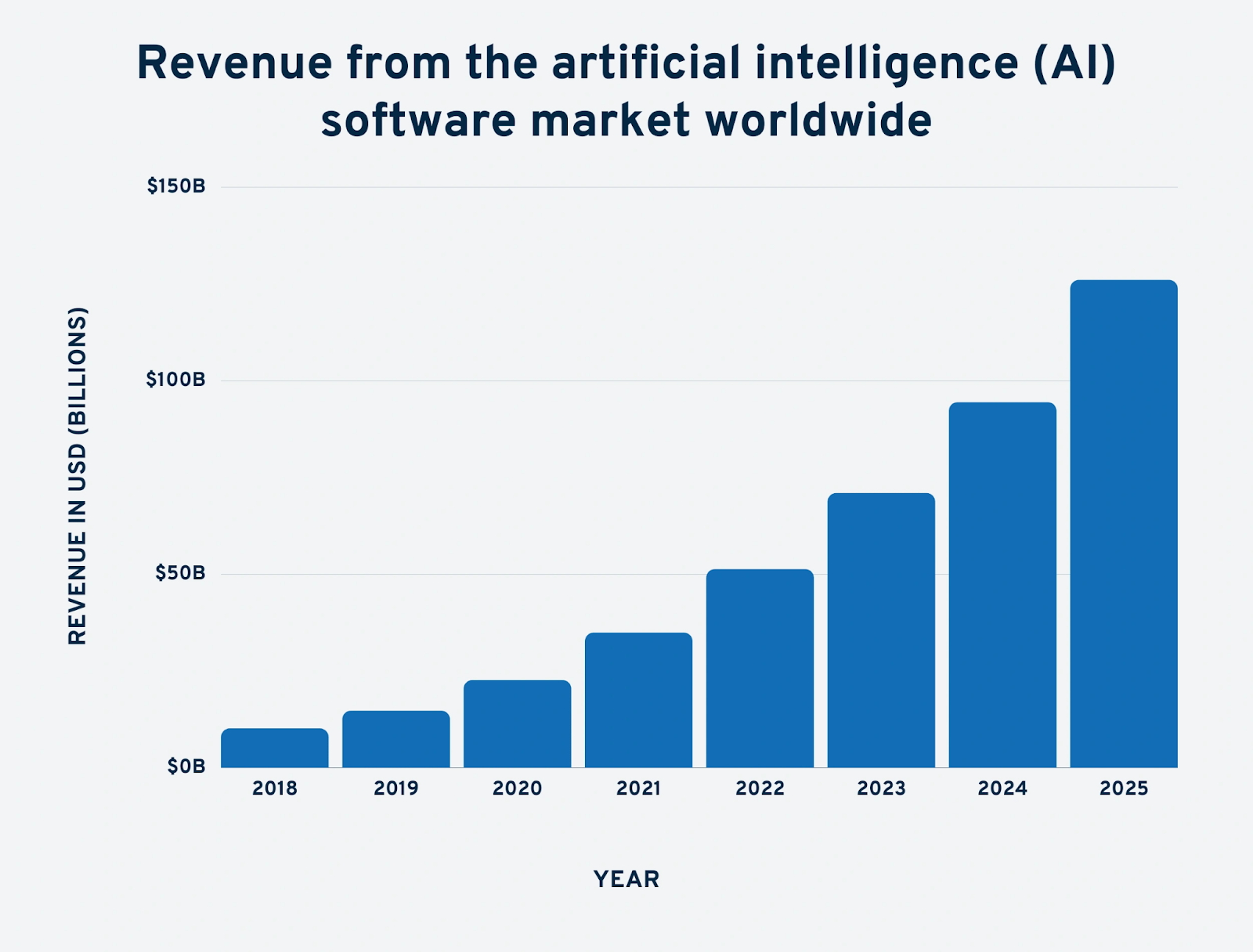
Image Source: Exploding Topics
The graph shows that apps using AI-driven analytics can see a significant increase in user engagement and revenue. Because, AI can help developers to identify and fix problems, target their marketing efforts more effectively, and predict future user behaviour.
4. Automated App Development:
AI can be used to automate tasks such as code generation and testing, which can save developers a lot of time and resources. Code generation tools can use AI to generate code based on user requirements, AI can be used to automate the deployment of apps ensuring the apps are deployed quickly and efficiently. According to a report by Gartner, AI-powered tools are expected to automate 25% of app development tasks by 2025.
Examples:
AppLift: AppLift is a company that uses AI to automate the testing of mobile apps. AppLift's AI-powered platform can automatically test apps on a variety of devices and operating systems, and identify bugs and performance issues.
Tesla: Tesla uses AI to automate the development of its self-driving cars. This allows Tesla to develop new features quickly and improve the safety of their cars.
5. Innovative Features:
AI can be used to create new and innovative features for mobile apps. for example, Augmented Reality (AR) apps can use AI to overlay digital information in the real world, such as directions or product information. AI can be used to create virtual assistance to help with scheduling appointments or making purchases etc.
Examples:
Google Maps: It uses AI to provide augmented reality directions overlaid on the real world, helping users to navigate more easily.
Snapchat: It uses AI to create lenses that can be used to overlay digital effects on the real world allowing users to express creativity and have fun.
By creating new and innovative features, AI can help mobile apps stand out from the competition and attract more users
As AI technology continues to evolve, we can expect to see even more innovative and user-friendly mobile apps that are powered by AI. AI has the potential to revolutionize the way we interact with mobile apps, and it is only a matter of time before it becomes an essential part of mobile app development. If you are a mobile app developer, you should start exploring how you can use AI in your apps. There are many ways to do this, and the possibilities are endless. By using AI, you can create apps that are more personalized, engaging, and secure. You can also use AI to automate tasks and improve your app's efficiency and productivity. The future of mobile app development is bright, and AI is a big part of that. So what are you waiting for? Start exploring how you can use AI in your apps today!
For custom software development, visit us at Zee Palm
To buy premium front-end flutter kits, visit Flutter Coded Templates
Check out free Flutter Components, visit Flutter Components Library

Guide to Build a Minimum Viable Product (MVP) for Your Mobile App
Over time, the popularity of mobile apps is increasing rapidly. To compete in the market and increase sales. Businesses are now developing their own mobile apps. According to an article, it's unsurprising that the mobile app market is booming, given that there are more than 6.3 billion smartphone users worldwide. The market is expected to generate over $935 billion in revenue in 2023. But no one wants to spend years of teamwork, loads of money, and precious time on an app that eventually has no success in the market and turns out to be a huge flop. That's where MVP steps in to prevent that from happening. In this story, we are going to guide you on how to build a Minimum Viable Product (MVP) for your mobile app.
What is a Minimum Viable Product (MVP)?
Before diving into that we need to have an understanding of what is an MVP. MVP stands for Minimum Viable Product is an earlier version of a product that has enough essential features to be used by early adopters. It is built with the intention of testing your product market worth without wasting amounts of time and money on the development. By gradually improving the product with the help of user feedback and their requirements. So businesses can compete in the market on a larger scale with an investment that's worth the money.
Steps to Build a Minimum Viable Product (MVP) for Your Mobile App
Here are some steps to build a Minimum Viable Product (MVP):
1. Identify Your Product Differentiating Feature
Before launching your app into the market, find out what is the killer feature of your product that will attract people and is worth investing money in. What does your app offer that others don't have? Is that feature compelling enough to launch an app based on it, and will it attract early users to maintain their faith in the app throughout the development cycle?
2. Do Market Research
Market research is an important step while building an MVP. It allows businesses to have a vision of what their target audience is looking for. Search for what other apps in your domain are providing. What features are they providing? Discover their app's strengths and weaknesses. Conduct thorough research to understand the competitive market. Find out your target audience's needs and start working on the features that are a must-have in the app. By doing this you would find out more opportunities for your app.
3. Create a Wireframe.
The next step is to create a wireframe for your app. A wireframe is a visual representation of the interface of the app. It gives you an idea of how your app would look like. Companies don't need to give the app loads of features. Start by only giving the basic features and essential ones. This would give users an idea of what type of features their app is providing. Different features, such as free features, subscription-based features, and other purchasing features, should also be taken into consideration. Businesses can also test and improve the feature over time with users. The process of discovering flaws, identifying areas for improvement, and determining the best features will become easier this way.
4. Build the MVP
The next step with a clear vision of all the previous steps is to build an MVP. Start by developing a basic version with all the essential features, while keeping the design user-friendly and simple for users to understand. This step includes developing the app, testing it, and ensuring that all features in the app are working fine before launching it. Also by keeping things within your budget and timeframe.
5. Launch the MVP
After all these important steps comes the final launch of the app. This is an extremely important step. Make sure that all the features are working perfectly without any bugs, glitches, or errors and that app doesn’t crash while using it. This stage decides if the app is a success or if it will survive in the market over time. Don't forget to promote your app on social media platforms to gain more followers. Many opportunities will come at launch such as investors, shareholders, and an increase in users.
6. Start Testing and Getting Feedback from Users
As soon as you have a working MVP, it's time to start conducting tests and getting feedback from early users. This will help companies to find out what's working and in what areas improvement is needed. Feedback can be acquired in different ways by creating forms, group chats, and also by inviting users to test your app. This way including the main audience for which the app is being developed can help a lot in increasing market value, loyal users, investors, and companies even gain people that will promote their app. With the help of these people, testing and improving the app becomes easier, making it more user-friendly.
7. Iterate and Improve
After getting feedback from users. It's time to repeat the process. Iterate and improve the app then talk to more users and repeat. In this step, more features will be added, Some will get removed and changes to the user interface will happen with the help of the users. Our final goal is to gradually improve the app, increase its market worth, attract more investors and shareholders, and ensure that the app meets the needs of the target audience.
Building a Minimum Viable Product is a process of developing and learning over time. The MVP should be flexible so that it can adapt to the changing needs of users. Following these steps ensures the creation of a successful MVP for a mobile app.
Why Build a Minimum Viable Product (MVP)?
The question that arises most often is, "Why build an MVP?" The answer to this question is simple. Why would you want to spend years of work, time, and money on a project that could end in massive failure? For example, consider launching an app with an estimated timeline of three years. You invest months in development, wireframing, prototyping, and spending a huge amount of money to make the app perfect. However, it eventually turned out to be a flop. Your business can go bankrupt and be destroyed in little time. So, to prevent this scenario, an MVP offers a solution not only for small companies but also for large corporations. By launching the app with minimum but essential features and improving it over time based on user needs. Even if it turns out to be a failure, identifying and addressing the issues can happen much sooner and be less destructive.
What are the Benefits of Building an MVP for your Mobile App?
There are many benefits of building an MVP for your mobile app such as:
- Earlier launch of your product in the market gives you a competitive edge over your competitors.
- Reducing development costs and risks by launching with essential features helps to eliminate risks earlier, rather than waiting until it's too late.
- By Getting user feedback and suggestions the app can be improved according to the target audience and become user-friendly.
- A better understanding of your users and market needs by involving users in the development of the app.
- Gaining investors and shareholders when they see your app is improving and worth investing their money in.
Things Not to Do While Building an MVP
These are a few things not to do while developing an MVP for your app.
- Build a full-fledged App- this is actually eliminating the whole point of making an MVP. Launch the MVP earlier and improve it over time.
- Not getting feedback- If you don't receive feedback from your target audience, for whom the app is being developed, your app won't improve and become user-friendly over time. This can lead to users losing trust in the app.
- Being afraid to take risks- experiencing risks and problems in any business is completely normal you have to be brave enough to deal with them. There is a famous quote that states"Fall in love with the problem, not the solution".
- Have an unrealistic budget and timeline- you must have a realistic budget and timeline while building an MVP for your mobile app.
Real-Time Apps That Have Enforced MVP
Here are some apps that have used the MVP approach.
1. Slack
The famous app Slack began as a messaging app to have team communication with each other. Then eventually they introduced more features such as file sharing, channels, integrations and more based on the user requirements
2. Instagram
Instagram MVP was a simple photo-sharing app that allowed them to put filters on it and share them on Instagram with limited features. Now it has features like sharing stories, notes, highlights, applying music to stories, and many other cool features based on user preference.
For custom software development, visit us at Zee Palm
To buy premium front-end flutter kits, visit Flutter Coded Templates
Check out free Flutter Components, visit Flutter Components Library

Building a Strong Brand Through Mobile Apps
Mobile applications have become an integral part of our lives in the constantly connected digital world of today. They make our lives more convenient, entertaining, and informative, and they may also help us establish strong brands.
A successful mobile app can assist a brand with:
1. Boost brand recognition: When users of your app utilize it, they are repeatedly exposed to your company name, logo, and other branding components. This promotes greater familiarity with and awareness of the brand.
2. Obtain leads and make sales: Using a mobile app can be a terrific way to do both. This can be achieved by giving app users access to exclusive content or special offers, or by linking your app with a payment processing system.
3. Build customer loyalty: By offering a tailored and interesting experience, a mobile app can assist you in building client loyalty. Offering features like push alerts, in-app incentives, and social network integration can help you achieve this.
4 . Enhance customer service: By giving consumers a simple way to seek assistance with their accounts or products, a mobile app can be utilized to enhance customer service.
5. Collect client information: Using a mobile app, you may gather important information about your customers, such as their interests, demographics, and purchasing patterns. This information can be utilized to enhance your goods and services, focus your advertising efforts, and create a more individualized client experience.
Here are a few more pointers for creating a powerful brand with mobile apps:
- Make sure your app is user-friendly and well-designed. Users should have no trouble using your app and finding what they're looking for with ease.
- Brand your app consistently throughout. This includes the typefaces, colors, and logo you use.
- Update your app frequently with fresh information and features. Users will continue to return because of this.
- Use email marketing, social media, and other avenues to advertise your app. Inform users about your app and the benefits of downloading it.
Brands That Have Strengthened Their Brand Identity and Engaged Customers Through Mobile Apps
Our daily lives now effortlessly incorporate mobile applications. They help us accomplish our tasks, have fun, and communicate with our loved ones. This development has led to an increase in the adoption of mobile applications by brands to strengthen brand recognition and engage consumers.
Here are examples of companies that have employed mobile apps to accomplish these objectives:
Starbucks:

Starbucks is a chain of coffee shops with more than 30,000 locations throughout 79 nations. Users can order and pay for their coffee in advance via the company's mobile app, earn incentives, and receive tailored recommendations. The app also offers a rewards system that encourages users to make purchases.
Nike:

Nike is a sportswear corporation with more than 700 outlets spread across 170 nations. Nike Run Club, a corporate mobile app, assists users in keeping track of their exercises and maintaining motivation. Voice coaching, real-time pace monitoring, and social media integration are all included in the app.
Airbnb:

With more than 6 million listings in 191 countries, Airbnb is a homestay rental firm. Users can browse and reserve rooms, get in touch with their hosts, and post reviews using the business' mobile app. Additionally, the app has a messaging function that enables users to communicate with other travellers.
Amazon:

Over 300 million people actively shop at Amazon, an online retailer. Users may browse and buy things with ease thanks to the company's mobile app. Additionally, the app has capabilities like voice search and in-app shopping lists.
Netflix:

Over 15,000 TV episodes and movies are available on Netflix, a streaming service. The company's mobile app enables consumers to stream their preferred TV episodes and films whenever they want. The app also has a function that offers users personalized recommendations for TV episodes and movies they might like.
Walmart:
With over 10,500 locations in 24 countries, Walmart is a multinational retail corporation. Customers can purchase food, gadgets, and other goods through the company's mobile app. The app also has a supermarket pickup option that enables users to place online grocery orders and pick up their orders from nearby stores.
Weather Channel:

The Weather Channel is a media organization that offers weather predictions and other information about the weather. Users of the company's mobile app can view radar maps, track storms, and receive real-time weather updates. The app also has a personalized forecast tool that gives users access to the most up-to-date local weather data.
Lyft:

Lyft is a ride-hailing business with operations in more than 600 cities across North America. Users can order rides, follow their rides' progress, and pay for them via the company's smartphone app. Additionally, the app has a tipping function that enables users to tip their drivers.
Uber:

Uber is a ride-hailing business with operations in more than 600 cities and 60 countries. Users can order rides, follow their rides' progress, and pay for them via the company's smartphone app. Additionally, the app has a tipping function that enables users to tip their drivers.
Our daily lives now effortlessly incorporate mobile applications. They help us accomplish our tasks, have fun, and communicate with our loved ones. This development has led to an increase in the adoption of mobile applications by brands to strengthen brand recognition and engage consumers.
For custom software development, visit us at Zee Palm
To buy premium front-end flutter kits, visit Flutter Coded Templates
Check out free Flutter Components, visit Flutter Components Library

Collaborative Development Tools For Remote Teams
Over the past few years, collaboration solutions for remote teams have nearly entirely transformed the workplace. They existed before that, but the COVID-19 epidemic made them more prominent. For remote teams, there are many different collaboration options to choose from. It is crucial to remain focused on the qualities that your group requires in a tool before locating one that has them. These virtual tools facilitate offline and asynchronous work and enable teams to operate from any location at any time.
Many mobile app development tools are helpful for remote teams due to their functionality and specifications. Some of the tools are listed here:
1. Slack:
Over three-quarters of Fortune 100, organizations already use Slack, which stands for "Searchable Log of All Communication and Knowledge" and is a chat and messaging application. It is accessible on the majority of popular platforms, including iOS and Android phones and tablets as well as Windows and Mac PCs.
Slack can improve team communication by combining instant messaging, email, and text messaging into one program. No matter where they are—in the field office, at home, or out door-to-door—your team can communicate and organize their work with Slack's desktop and mobile versions.
Slack offers a safe and dependable way to communicate with your remote staff, outside partners, and clients. When you need to stay on top of a project or take care of an urgent assignment, its direct messaging system is ideal. With Slack, you can set up various channels for various subjects or jobs, making it simple to find pertinent talks.
Uses of Slack:
The following are some significant applications of Slack:
- Reminders can be set up for both you and other people. You can utilize the built-in reminders, Google Calendar, and different to-do lists to help the volunteers keep track of forthcoming activities and due dates.
- Even if they are not in the office, your volunteers and employees can access a lively community you develop.
- Quick inquiries and choices, real-time collaboration, impromptu audio or video conversations, getting someone's attention right away, quick voting or polls, keeping everyone connected, and immediate onboarding of new team volunteers and team members are all things that Slack excels at.
Why Can't Slack Be Used?
- It could be challenging for your team members to get acclimated to utilizing Slack if they are not tech buffs. But the features it offers will amaze your team because it is highly intuitive and user-friendly.
2. Google Workspace:
Google's newest set of productivity tools is called Workspace. It brings together all of our favorite G Suite applications, including Calendar, Gmail, Drive, Docs, Slides, Meet, Keep, Forms, Sites, Currents, and Sheets, even more compactly under one attractive, colorful roof.
It is a new friend that unites effective workers from any industry after they have been split apart by social distance. Google has examined its current tool to see how it can develop a virtual workspace for its consumers. When teams aren't together, Google Workspace helps to foster successful collaboration and build relationships between them.
Google Workspace can be set up to assist businesses that handle extremely sensitive data. An administrator might, for instance, forbid the offline storage of Drive files, email, and other Workspace data.
Uses of Google Workspace:
- A new, thoroughly integrated user experience that enhances team collaboration, keeps front-line employees engaged and powers new digital customer experiences for organizations.
- A new brand identity that represents our aspirational product goal and the interplay between our goods.
- Its innovative methods start with solutions made to meet the particular requirements of our wide variety of customers.
Why Can't Google Workspace Be Used?
- It could be challenging for novice users to comprehend Gmail labels.
- Maximum participant numbers for Google Meet's Business Starter, Business Standard, and Business Plus plans are 100, 150, and 250, respectively. Compared to several other tools, this one has fewer users.
3. Trello:
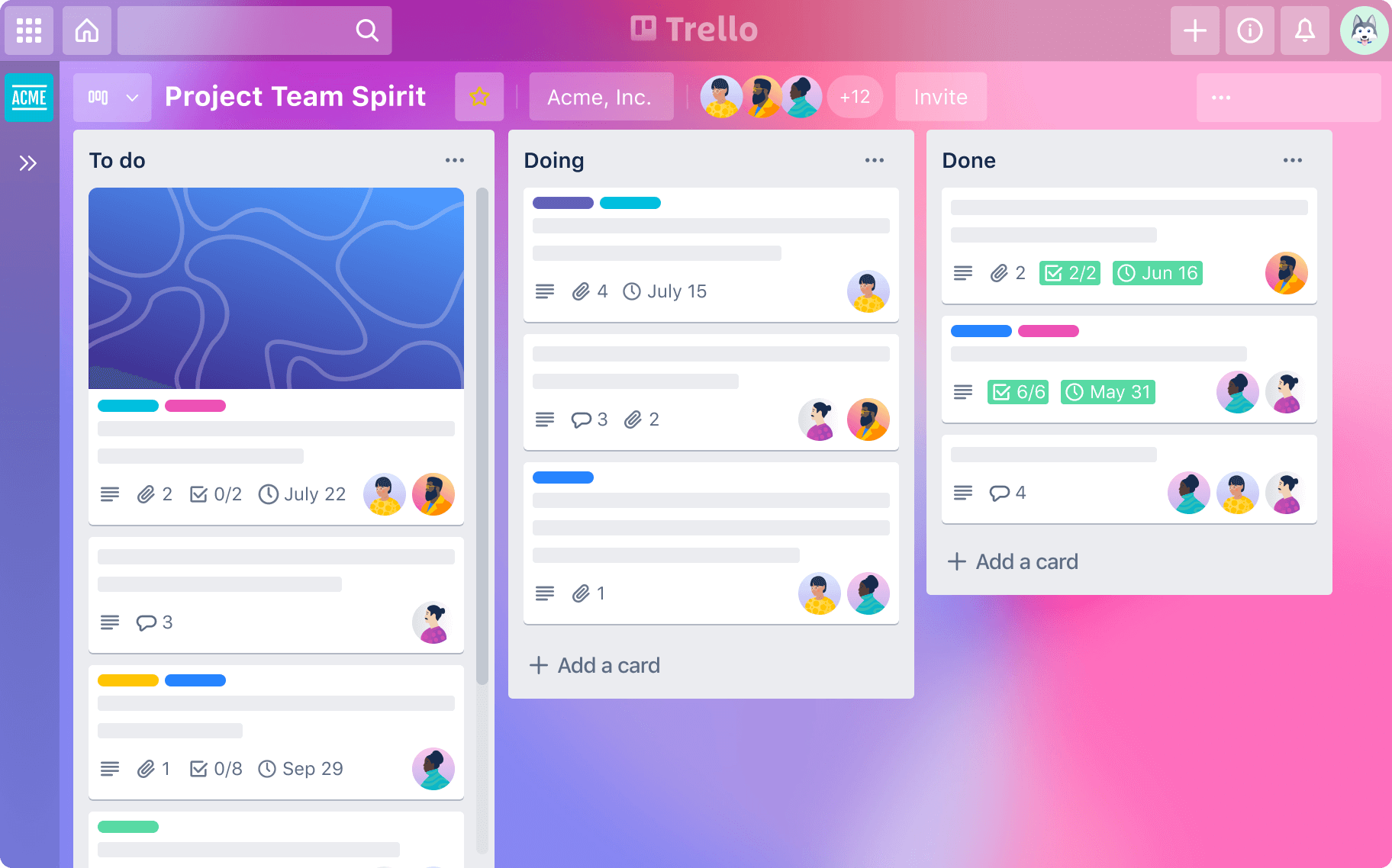
Trello is a project management platform featuring a few tools for remote teamwork to help teams plan tasks and projects. It uses a Kanban-based UI. For each activity or item on the board, teams can create cards, which they can then move across columns to show different degrees of organization or advancement.
It is a tool that divides your work into boards. Trello allows you to quickly see what is being worked on, who is working on it, and where it is in the process. To better organize various projects or teams, you can create numerous workspaces. You can also customize a workspace's name, kind, short name, website address, and description. You can choose whether each board in the workspace is visible or not, as well as its related permissions (such as who can update it). Industry leaders like Google and groups that are improving the world, like the Red Cross, use Trello.
Uses of Trello:
- It was made to be used by everyone, not only project managers, making it usable by small teams of 3 to 10 as well as SMBs with more than 250 people.
- Trello helps remote teams since it makes it possible for everyone to collaborate at any time. Your team can remain productive without compromising security or privacy because of its user-friendly UI, clear organizational structure, and customizable permissions settings.
- Trello is simple, making it simple to understand how to use. It makes sense that both small and large organizations are implementing it.
Why Can't Trello Be Used?
- Trello, other SaaS programs, and virtually any software that depends on the internet have issues with data access. There will always be times when you cannot access data because of an internet problem, even though internet access is getting more widespread as time goes on.
- Trello can store a lot of attachments, but if you have a gold membership, you can only upload files that are no larger than 250MB each. Additionally, if you are a regular member, your upload allowance is only 10MB.
4. Zapier:
Zapier is an internet tool that connects your favorite apps and services to automate operations. You can automate tasks as a result without having to develop this integration yourself or have this integration created for you by a professional.
It is software that uses workflow automation to assist teams and remote employees complete tasks more quickly. With the help of the tool, you can swiftly link a variety of web services and automate processes like email automation, customer support ticket creation, and even the addition of new CRM entries.
The majority of the apps and software used in your business are automatically linked and synchronized to do this, enabling the automatic execution of regular tasks. You need so-called "Zaps"—automated workflows connecting two or more of your online apps—to accomplish this. Zaps consist of two components: a trigger and the automated actions that follow.
Uses of Zapier:
- You can transfer data quickly between several platforms and apps using Zapier.
- Look for preset workflows to save time and money. Templates for Zap. Start by using a zap template.
- By linking all of my apps, I can create something. the Zap Editor. Start constructing in the editor.
Why Can't Zapier Be Used?
- The numerous app connectors offered by ZapierDelays between linked apps - Latency and sync problems can occasionally cause delays in Zapier automation.
- Each Zap is limited to 200 activities per 10 minutes. Paid accounts are not subject to this cap. A maximum of 105000 records can be checked for new data. The Zap trigger can malfunction if your trigger includes more than this quantity.
5. Todoist:
For professionals and small organizations, Todoist serves as a task and to-do list manager. Todoist combines tasks, projects, comments, attachments, notifications, and more to help users increase their productivity as a team and for themselves.
It enables you to schedule your week and days. The tool allows you to add small activities that you complete one at a time and give each one a description. The company is situated in California, and the software was first released in 2007.
Todoist also offers dashboard views so users may see the status of numerous projects at once. Its interfaces with Slack and other well-known apps enable users to maintain an efficient workflow.
Uses of Todoist:
- Establish due dates and recurring due dates for your tasks to stay on track.
- Set task priorities to help you concentrate on the right things.
- The Inbox, Today, and Upcoming views can be used to keep track of your tasks.
Why Can't Todoist Be Used?
- From within the app, timekeeping is not possible. It must be integrated with a third-party time-tracking application.
- Recurring tasks are not capable of having subtasks.
The following aspects should be taken into account when selecting a collaborative mobile app development platform for your team:
- Needs of your group: What characteristics are the most critical to your team? What sort of spending plan do you have?
- The kinds of tasks you perform: What sort of assignments do you usually handle? What sort of cooperation do you require?
- Size of your group: How many individuals make up your team? How frequently must we work together?
After taking these things into account, you can start to focus your search and select the tool that will work best for your team.
For custom software development, visit us at Zee Palm
For free premium front-end flutter kits, visit Flutter Coded Templates
Check out free Flutter Components, visit Flutter Components Library

Choosing the Right Mobile App Development Strategy for Your Business
Businesses in today’s market can only stay afloat if they are following the current trends that are going on in the world so if you don't have an application for your business you are already lagging in the market. By developing an application for your business you may get ahead of the competition and demonstrate that you keep up with the newest trends by creating a well-designed app with simple features. These mobile apps play a crucial role in our daily lives. We utilize them to do our job, shop online, and remain in touch with friends and family. It is predicted that the market for mobile apps will grow to $693.9 billion by 2025. But it might be tough to know where to begin with so many various mobile app development approaches available. A clear roadmap is provided by a mobile application development strategy, which also guarantees that you are using the appropriate mobile and can create a successful app with all the features you desire. We will discuss different mobile app development strategies that are going on in the world to find the best one for your business.
Different Types of Mobile App Development
1) Native App Development
The process of developing software or apps specifically for a given device or mobile app platform, such as Android or iOS, is known as native app development. Native apps are built dedicated to a specific platform that's why they are directly connected to the operating systems. Which makes the user experience more engaging. Furthermore, native apps are to be downloaded according to the respective app store that is available for their platform they do not operate in the browser. While Swift and Objective-C may be used to create iOS apps, Java or Kotlin can be used to create Android apps.
2) Cross-Platform App Development
Utilizing a cross-platform mobile development approach, it is feasible to create an app that runs on many operating systems, such as Android, iOS, and Windows. Some or even the entire source code for cross-platform applications may be shared. As a result, developers can produce and distribute mobile assets that are compatible with both Android and iOS without having to recode them for each platform separately.
3) Hybrid App Development
Hybrid development means developing an application that is compatible with all platforms like IOS, Android, and Windows. Hybrid development is getting popular day by day because of its cross-platform functionality, rapid development speed, and lower maintenance cost has made its image in the market. Therefore even companies compete to hire hybrid developers for their applications.
Pros and Cons of Different Mobile Apps Development
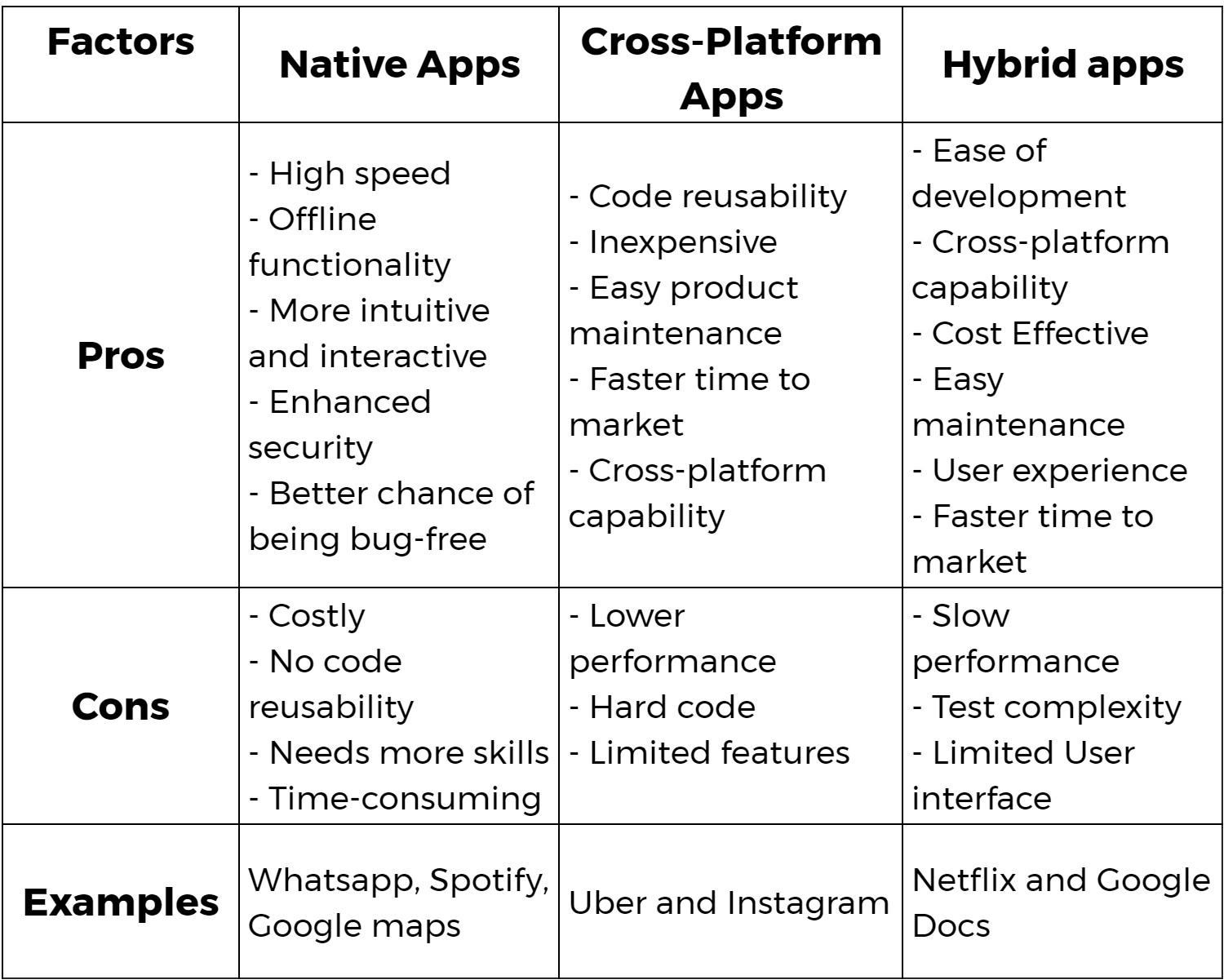
Benefits of Flutter Hybrid Development
For companies looking for a quick, affordable, and simple to maintain method of creating mobile apps, Flutter hybrid development is a fantastic choice. It has many benefits that can help your business flourish, including:
- Cross Platform: Developers of Flutter apps can create applications for various platforms using the same code base.
- Single Codebase: Being a single codebase developers can quickly design, improve speed, and add features to the application efficiently.
- Fast and Cost Effective: As it is a cross-platform framework along with being a single code base it makes the life of developers easy because they have to focus on the core functionality of the app’s UI which makes the development process fast and inexpensive.
- Native-like performance: The programming language Dart, which is compiled and achieves performance close to native, is used by Flutter. By immediately compiling the code to native ARM machine code, the Flutter framework avoids the need for intermediary interpretations or JavaScript bridges. As a consequence, the program performs superbly and the animations render quickly.
- Reduced Testing Time: As Flutter mobile app development has automated testing that's why there is no need for extensive manual testing.
- Customizable UI: Widgets are flexible UI elements that are available in a variety of Flutter. The natural look and feel of the platform may be readily replicated by customizing these widgets, as well as making your distinctive designs.
- Excellent for MVP Development: Flutter has many advantages that make users attracted and make lives easier That’s why it is excellent for MVP development, as this platform is very beneficial many companies want to invest in it.
A fantastic example of a hybrid application is Gmail. It has established itself as one of the top applications available for both mobile and online use. Twitter is a hybrid application as well because it can be used on a variety of platforms.
Choosing the Right Mobile App Development Strategy for Your Business
Now choosing the right mobile app development strategy for your business to succeed in this difficult market is an important decision. Many factors should be considered while choosing the strategy.
- Consider Your Target Audience: For whom are you developing the app? What are their expectations and needs? You may select a development approach that will best serve your target audience once you have a clear understanding of who they are.
- Set a Budget: What kind of budget are you looking at for developing mobile apps? You may reduce your alternatives and select a development strategy that fits your budget by using your budget. You should choose a strategy that is inexpensive and will result in a larger outcome.
- Determine the features you need in the app: What features are necessary for the success of your app? You may select a development plan that can accommodate the features you require once you are aware of what they are.
- Evaluate your Timeline: When do you want the application to be completed? This timeline will ensure that if you want a detailed and time-consuming strategy or a good strategy that is done in less time.
- Consult with a mobile app development expert: Consult a mobile app development specialist if you're still uncertain about the best development plan for your business. They can assist you in determining your needs and the ideal development plan for your company.
Finally! As we conclude, we have gained knowledge regarding the creation of native, cross-platform, and hybrid apps. Flutter hybrid development, on the other hand, is the approach that may be a good decision for your company to flourish because of its enormous number of benefits and quick development process. Businesses seeking a cost-efficient, successful, and aesthetically pleasing mobile app development strategy should strongly consider Flutter due to its ability to create apps that are stunning, simple to use, perform like native apps, and can even be built in less time for multiple platforms.
For custom software development, visit us at Zee Palm
For free premium front-end flutter kits, visit Flutter Coded Templates
Check out free Flutter Components, visit Flutter Components Library
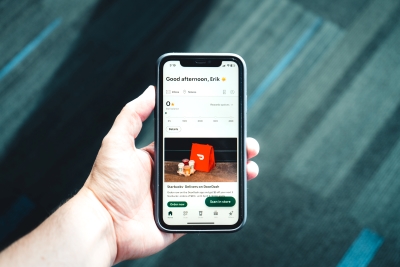
5 Must Have Features for a Successful E-commerce App
Importance of an Online Presence:
The e-commerce market is growing rapidly, with global sales expected to reach 5.4 trillion USD in 2023. This growth is being driven by several factors, including the increasing popularity of online shopping and the growing availability of Internet facilities. Furthermore, the COVID-19 pandemic was a major contributor to this growth, people still prefer to shop online even after the pandemic is controlled.
To succeed in this competitive market, businesses need to have a strong online presence. One of the best ways to do this is to create a successful e-commerce app. A well-designed and user-friendly e-commerce app can make it easy for customers to find and purchase products, regardless of where they are.
Here are 5 must-have features to build a successful e-commerce app in 2024:
1. User-Friendly Interface:
An e-commerce app should be easy to use and navigate, with clear and concise language throughout the app, and avoid using technical terms that the user may not understand for example, instead of “product specification”, use “package includes”.
Use visual cues such as icons and labels to help customers navigate. for example, use icons to represent product categories. Make sure the app is responsive and works well on all screen sizes, especially for mobile apps as most users prefer mobile phones to shop online.
2. Search and Filter:
A good search and filter functionality is essential for any e-commerce application. It allows customers to quickly and easily find the products they are looking for, irrespective of their device and location.
Make it easy to find what the customers are looking for, The search bar should be prominently displayed and the results should be relevant and up-to-date. For example, Amazon’s search results are relevant, and up-to-date, with the most popular products appearing at the top.
Offer a variety of filters so that customers can narrow down their search results by different criteria, this can include product, name, category, price, availability, etc.
According to a study by Baymard Institute, 44% of online shoppers abandon their cart because they cannot find the product they are looking for. A good search and filter functionality can help increase sales.
3. Secure Checkout and Payment Process:
Customers need to feel confident that their personal and financial information is secure while making purchases online. According to a study by PwC, 63% of online shoppers are more likely to shop with a retailer that offers a secure checkout process.
A secure checkout process should use a secure payment gateway, A secure payment gateway is a service that encrypts data and protects it from unauthorized access.
Use SSL/TLS encryption to protect the customer’s data when it is being transmitted between the website and the customer’s browser.
Customers should be required to create a strong password for their account, it should be at least 8 characters long, and it should have a combination of special characters, mixed case alphabets, and numbers.
Test your app with real users for vulnerabilities and usability issues to fix any problems. For example, Amazon regularly tests its checkout process with real users to identify and fix problems.
4. Personalization and Recommendations:
Personalization and recommendations allow you to show customers the products that they are likely to be interested in, which can increase sales and improve customers’ experience.
According to a survey by Retail Touchpoints, 70% of shoppers are more likely to purchase from a retailer that recommends products based on their purchase history.
There are many ways to personalize and recommend products to customers,
- Based on behavior, products viewed, added to the cart, or purchased in the past.
- Based on browsing history, pages they have visited on your app.
- Based on purchase patterns, products they have purchased from other retailers.
- Based on demographics, such as their age, gender, location, etc.
- Based on interests, Products they have liked or shared on social media.
Personalization and recommendations can be implemented using machine learning algorithms on users’ data. Some customers may not be comfortable with you collecting and using their data. Make it easy for them to opt-out.
5. Order Tracking and Notifications
Order tracking and notifications allow customers to stay informed about the status of their orders, which can help reduce the risk of customer turnover. According to a study by Salesforce, 70% of online shoppers are more likely to shop with a retailer that offers order tracking and notifications. Hence, it can be a robust tool for increasing customer satisfaction and loyalty.
There are numerous ways to provide order tracking and notifications, Some popular methods are:
Email: Email is a popular way to send order tracking and notifications, it is easy to set up and can be sent to a large number of customers at once.
Text messages: They are more immediate than email and are less likely to be ignored,
Real-time tracking: Many apps and websites have features that allow customers to track their orders in real time. This can be a convenient way for customers to stay informed about their order status.
For example, Daraz provides real-time order tracking information to customers, including estimated delivery date and location of the order.
By providing order tracking and notifications, you can improve the customer experience on your e-commerce website or app and increase customer satisfaction.
As the e-commerce market continues to grow, Businesses should recognize the importance of a strong online presence to thrive in the market. Developing a successful e-commerce app is a crucial step toward achieving this goal. The five features discussed above are vital to creating an app that exceeds customers’ expectations.
However, depending on the target audience and nature of the business, you can incorporate as many features as needed, such as ratings and reviews, easy returns and refunding processes, etc. Regularly analyzing user behavior and feedback can help you refine and optimize the app's features over time.
For custom software development, visit us at Zee Palm
For free premium front-end flutter kits, visit Flutter Coded Templates
Check out free Flutter Components, visit Flutter Components Library

The Role of UX in a Mobile App
UX is the major aspect that differentiates between a good website and a great website. The term "user experience" refers to how a program, system, or service makes the user feel. It is a broad term that may be used to describe a variety of things, such as how simple a product is to use, how easy it is to navigate, how relevant the content that is displayed is, etc.
Businesses must concentrate on user experience (UX) to succeed in the constantly evolving digital market. The design, functionality, content, and usability of the platform all contribute to the user's overall experience (UX) when interacting with a website or app. Businesses that place a high priority on user experience can give their customers a satisfying and memorable experience, which can enhance engagement, conversions, and customer loyalty. I'm not a user experience designer, but I can spot a poor design when I see one. like the time I attempted to order a pizza online, but the website kept crashing. Or the time I went to book a flight and all of the search results were in Arabic. So, in this blog, we'll explain how UX design benefits mobile applications.
In order to understand the role of UX in mobile apps we should first go through the functionality of UX designs, the tasks that are under this process that need to be accomplished, and what kind of testing is required to make a good UX design application.
The Key Elements of UX Design for Mobile Apps
The key elements according to my research on UX design are:
- The app should show consistency in its layout. So that it's easier for the users to use and they don't have to learn new things every time they use the application.
- A simple and clean design is what makes your application attractive and makes the user stay, otherwise, it doesn't take a second for the user to move to another application that is easier to be used.
- The app should be engaging for the users to come back again to use the application for their tasks.
- Navigation is the main thing that makes an app easier to use. Because who would like to think while running an application “Where is the settings option now?”.
- An application should require minimum user input to make the user comfortable while using the app. It makes it easier to fully function the application on mobile phones, as due to the smaller screen some tasks like typing a lot on such a small screen where the keyboard covers half the screen is hard.
- When designing an application it should be kept in mind that targets should be big enough so that the user doesn’t suffer and end up leaving the application when he taps on a target and it doesn't perform its required task.
- During the designing process, it should be considered what are the areas which are easily accessible on the screen while the user is holding his/her mobile so that targets are placed according to the needs of users
Enhancing the Usability and Accessibility of Apps
While designing an application, usability, and accessibility are the key aspects that determine the success of your application because what application will be considered usable if it's not even accessible by people 88% of users are less likely to return after a bad user experience.
User experience designers are in charge of assuring the usability and accessibility of a product. Accessibility is the factor that makes sure people even with certain disabilities can fully benefit from your application. This cannot be done by just setting some tools for their ease, this has to be done by changing even the minor details that could benefit the users like easily accessible fonts, using words that are understandable by all and not just a specific group of people, instructions should be clear and precise on how to run the application, the layout of the application should show a similar pattern throughout the application so the users don't have difficulty in finding the options or targets they need.
There are some features you could add based on the type of people your application is mostly to be used by like a screen reader that allows the user to just listen to the text and then take the appropriate actions, Speech recognition has become a very common feature and even in my household older relatives use this feature to write text and I am telling you they are very happy with it.
As we all know you can't become a better designer in one day so research is very important, You should research the users that are most likely attracted to the functionality of your application and then think like them when designing to enhance the usability and accessibility which is the job of a UX designer.
Impact on Mobile App Speed and Performance
A good UX design plays a vital role in improving an app’s loading and processing speed which results in a prominent increase in the overall performance of the application which attracts more users towards it. Indeed we only recommend a certain application when its speed is high, no one wants to run a slow application.
Due to our fast-paced world with the development of technologies every day, when a user opens an application he/she expects fast loading speed and if that is not provided it will result in frustration, and anger and the user can even abandon the application. As a result, this will cause customer dissatisfaction that will in turn cause the failure of an application.
According to a study by Google, 53% of users will abandon an app if it takes more than 3 seconds to load.
This is where UX design comes in. The UX designer uses techniques that can store frequently accessed data in memory for faster responses. For UX designers the user is the main priority and the user needs both a feature-rich application as well as a fast, responsive app. Hence, the designer balances both factors by loading the features with more importance first than the others.UX designers use CDN which is a collection of servers that allows users to access content from the server that is most convenient for them. This facilitates faster image and video loading.
Benefits of UX in mobile applications:
- Users are more likely to be happy with a product or service when they like using it. This may result in greater customer loyalty.
- By helping consumers locate what they're searching for and finish their intended activities more easily, UX design may assist in increasing conversion rates.
- By improving the efficiency and effectiveness of products and services, UX design can help cut costs. To do this, cut out any steps or features that are not necessary, and make sure the design is simple to comprehend and use.
- Lastly, a pleasant user experience can aid in strengthening a brand's reputation.
Lessons to create a great UX design:
Up till now in this blog, we have learned many things about UX design and how it can help the application to become successful and liked by its users. Now what are the factors that can help you to improve your UX design:
- Knowledge and ideas can’t develop a great design but user experience can play a vital role in this. You should focus on the users that are going to use your application, what effects the app will have on their lives, and how they will engage with it.
- Think big is the term that should be kept in mind while designing so that the designers should learn to develop apps that can help users for a long time as well.
- The products should be made in such a way that they exhibit ease and can accomplish tasks in return they become a part of people’s everyday lives.
- The application’s purpose should be known so that the users know what they are expecting and it will be according to their needs.
When an application is made with a bad UX design it is the easiest way towards its downfall so design should be carefully made.
Mobile App UX Statistics:
According to research:
- Costa Coffee increased app registration by 15% due to finding invalid password entries
- JobNimbus could increase app ratings from 2.5 to 4.8 after redesigning their app and using UXCam's data.
- Record reduced support tickets by 142% by using session replay to get information for UX issues.
- PlaceMakers doubled in-app sales after finding a UX problem with session replay.
- Housing.com increased feature adoption by 20% after redesigning its search functionality.
- WhatsApp delete message feature that is still present today is an example of bad UX design as it irritates the users if a message is deleted it should be gone.
Conclusion:
UX, in short, is essential for a successful mobile app. Making an app that users find simple, enjoyable, and helpful benefits from adhering to UX standards. This increases user retention and draws new users to your app. UX isn't just a part of the app, it's like the special path that connects the app to users, making them happy even after they stop using it. So, bear in mind, that when you care about UX, you're not simply developing an app. You're making experiences that stick with people and help your app do amazing.
For custom software development, visit us at Zee Palm
For free premium front-end flutter kits, visit Flutter Coded Templates
Check out free Flutter Components, visit Flutter Components Library

How Fitness Apps are Reshaping the Workout Industry.
In Today's rapid and busy world, the fitness industry is gaining a lot of attention. Especially during COVID-19 when people were not able to go anywhere and had to stay inside their houses to protect themselves from this deadly disease. People started to worry about their health and fitness. Since people cannot go outside of their houses to the gym, a hike in fitness apps took place in the market. People started to prioritize their health, began working out, and started using fitness apps.
Role of Fitness Apps
Fitness apps are playing a big role in transforming the workout industry. Especially for busy working people and stay-at-home mothers who don't have time to go to the gym or consult a nutrition specialist, a fitness app is a great alternative for them. According to an article in 2020, fitness apps saw a 46% increase in downloads worldwide due to the COVID-19 pandemic. The hype of fitness apps is ever-growing. Fitness apps have over two billion active users and the fitness app market is expected to reach $14.7 billion by 2026. A drastic change can be seen in these years. They have made exercises more accessible and easier, allowing users to work out at their own pace while monitoring what's best for them, from diets to different daily exercises. Fitness apps also motivate users by introducing features like daily log goals, rewards, and goal tracking. You also get personalized plans and routines so you can work accordingly. Fitness apps can track your steps, calories burned, heart rate, and body measurements. Moreover, new technologies, such as wearable devices that collect data on the user's progress by installing these apps on the devices, are giving a new dimension to the fitness industry.
Different Domains of Fitness Apps
There are a lot of different categories of fitness apps that are available. A few of these are:
Workout and Exercise Apps
Most of these apps give users a properly planned workout routine and different exercises from cardio to HIIT. Give different training plans, instructions, and video demonstrations of the exercises to improve the user's fitness and health.
Nutrition and Diet Apps
These apps provide the user with a proper diet plan, including tracking calorie intake, proteins, and nutrients of the meal. They also help users make healthy choices and suggest different recipes to try, providing good suggestions for improving their health and maintaining a healthy lifestyle.
Running and Cardio Apps
Apps like these keep track of the user's running, walking, and cardio activities. They monitor distance measurements, steps taken, and the burning of calories. These apps also provide features like GPS tracking, setting certain goals, and daily achievement log bars, ensuring that users can benefit from them and maintain a healthy life.
Weight and Heart Rate Tracking Apps
Weight tracking apps help users track and manage their progress, including tracking body measurements and comparing their weight journey, whether it is to lose or gain weight. Heart rate tracking apps keep track of user heart rates, ensuring that they are in a normal range.
These apps are improving the fitness industry gaining more followers as not many people can afford to go gym and have a personal diet planner. Even people with busy schedules prefer the apps over going to the actual places.
The Positives of the Fitness Apps
There is a wide range of benefits of these apps in the workout industry. Some of them are:
Convenience
Fitness apps allow users to work out according to their preferred time. Users can work out anytime and anywhere as it is available at all times. they are also quite flexible allowing users with busy schedules to create their workout timing and routines. The users don’t even need workout equipment if they don’t have it as it provides hand full amount of exercises.
Personalization
These apps also provide users with benefits like personalization. Users can input their fitness goals, body measurements, and any concerns related to their health to develop planned workouts specially made for these individuals and according to their requirements. Individuals can also choose what time is best for them. Things like these may not be available at a traditional gym.
Variety
These apps provide the user with a variety of workout and diet plan options.From traditional workouts to HIIT and Yoga. Different dance workouts are also available for those who are bored of the same boring workouts. These apps also suggest different diet plans and recipes for the user. So, they can choose the best workouts and diet plans according to their mood.
Cost Effective
Fitness apps are very cost-effective in comparison to the prices of actually going to the gym and nutrient specialists for diet plans. A Lot of them are free and the ones that are not free are also quite affordable. They are also flexible and users can choose the best time for themselves.
Workout Tracking
These apps also allow users to keep track of their workouts and monitor their journey. They also provide information about the percentages and differences that have occurred in this progress. Moreover, these apps help users stay motivated and provide them with statistics to improve their fitness journey.
What does the Future Hold for the Fitness Apps Industry
The fitness app industry is booming, and in the upcoming digital world, it is going to evolve even further. More virtual reality (VR) and augmented reality (AR) gyms and apps are going to be introduced. Digital devices that can accurately measure body temperature, health rates, and weight will be developed. Artificial intelligence (AI) will introduce features like virtual instructors, planned workouts, and accurate feedback. Moreover, more entertaining game-based fitness apps will be introduced, such as parkour and reward-collecting games combined with fitness apps.
Real-Time Fitness Apps
Some of the famous fitness applications are:
Nike Training Club
Nike Training Club offers a wide range of workouts that includes Strength training, HIIT, Cardio, and yoga training. Moreover, they provide video demonstrations, and instructions and also provide personalized recommendations by keeping track of their user progress. They have over 1.8 million active users.
7 Minute Workout
7-minute workout is another great fitness app. It takes only 7 minutes of your day and provides you with video demonstrations and timers. This is great in such a way busy people can easily use it as it takes only 7 minutes of your day. The exercises are easy and you can do that multiple times if you want. 7 Minute Workout is the #1 fitness app in 127 countries.
Zombies, Run!
Zombies, Run! Is an interesting fitness app that is also a story-based game. The story is about an apocalyptic world where the users are being chased by zombies. To stay alive you have to run and complete missions. It is a way to make running, jogging, and walking interesting so users don't get bored and try to complete way. It's a win-win app you get entertained and also fit.
MyFitnessPal
This is another great fitness app that keeps track of your calories and nutrition intake. This app offers meal plans and provides users with great recipes. This app has over 200 million users. You can also get personalized keto diet plans by giving your input such as weight and body measurements.
Fitness apps are going to keep evolving in the workout industry. It can be seen in these last few years and it is expected that they are going to reshape the industry even more as it is the future and the need of this current era. The virtual world has shaped and moulded our lives according to our needs, and fitness apps offer us luxury as it saves our time, and travel cost, and we can schedule our workout according to our stamina, speed, and the type of exercise and diet suitable to us fully panned in our palms. This game changer has made lives easier, better, and reliable as well as contributing to the success of the industry.
For custom software development, visit us at Zee Palm
For free premium front-end flutter kits, visit Flutter Coded Templates
Check out free Flutter Components, visit Flutter Components Library

The Future of Flutter
Flutter is a revolutionary front-end programming framework developed by Google that can be used to make fantastic cross-platform mobile apps. The framework is written in the Dart programming language, which was created by Google.
Flutter was developed in response to the shortcomings of well-known app development frameworks like iOS and Android. Flutter develops mobile applications at a fraction of the cost, speed, and complexity of native code.
Once a year, a team of Google developers develops updates and patches for this platform. They have the ability to produce feature-rich, fully functional cross-platform programs. Over 2 million users and over 90,000 apps are presently served by this framework internationally.
Flutter reached a big milestone when it transitioned from being just an Android and iOS app development platform to a cross-platform technology that enables developers to build complex apps that work beautifully on the web and desktop browsers that run on Windows, Linux, and macOS.
Slogan for Flutter:
The tagline for Flutter in 2023 should be "making dreams come true" by effortlessly delivering effective and aesthetically beautiful solutions. The advantages Flutter offers businesses include cost savings, increased customer appeal, and access to numerous platforms.
Future of Flutter Development:
Flutter development has a promising future. The framework is still in its infancy and has a lot of potential for development. Flutter is open-source and cost-free to use. Additionally, Google created it, so there will be a tonne of support.
The Flutter team is working on additional features, so expect to see more advancements in the future. Because Flutter, for instance, comes with native support for vector graphics and animations, programmers can construct intricate user interfaces without the aid of outside libraries or frameworks.
You can create native apps for Android and iOS using Google's Flutter mobile app SDK. On both platforms, it offers a fluid, quick, and high-performance mobile development experience by utilizing the capabilities of the Dart programming language.
Unlike other mobile SDKs, Flutter takes a new approach to app development. It is simpler to write, test, and deploy code across many platforms when using Flutter since you can construct a single codebase that runs on both iOS and Android. Concerning various architectural designs for various platforms, you should not worry.
Why the Future of Flutter Looks Bright in 2023 and Beyond:
Flutter will have a successful future! Although it has done admirably in the past and present years, tech experts believe that the Google-focused Flutter app development has the ability to shine even brighter and take its place as the leader in its field right now.
Flutter is a cutting-edge cross-platform application development technology that is causing quite a stir. It is an application framework that Google first launched in 2017, and it has since grown with updates, changes, and ecosystem enhancements each year. Future potential for Flutter development is vast for developers, teams, and organizations
Today's technology provides distinctive, eye-catching, and natively developed programs to facilitate the creation of mobile, desktop, and cloud-based platforms. Google introduced Flutter 3.0 in May of this year, along with new features and enhanced support, as well as improvements to performance and stability.
With the launch of Flutter 3.0, Google declares its commitment to the Flutter platform for many years to come, along with its ongoing support, investment, and support. The number of target platforms available for Flutter development keeps growing at the same rate as the technology's capabilities and productivity.
Flutter's hot reload functionality allows for a quick development cycle. Mobile app developers no longer need to wait for the app to restart or through time-consuming recompilation when making changes to the code because those changes are immediately reflected in the app. Developer productivity is significantly increased by this iterative development method.
Future Development Trends for Flutter Apps:
As the framework continues to develop and gather momentum, there are exciting prospects for the future of Flutter app development. Future Flutter app development trends include the following:
Desktop and Web Support:
Beyond mobile, Flutter's cross-platform capabilities are growing. Using the same codebase, developers will be able to create applications for Windows, macOS, Linux, and the web thanks to the launch of Flutter for desktop and Flutter for the web. This will make cross-platform development a breeze and create new possibilities for deploying Flutter apps.
Enhanced UI Experiences:
Flutter comes with a plethora of customizable UI widgets, and we may anticipate even more complex UI possibilities in the future. The Flutter team is always trying to make animations, transitions, and visual effects better. The framework will continue to give programmers the tools they need to make gorgeous, immersive user interfaces that result in aesthetically appealing app experiences.
Machine Learning and AI Integration:
As machine learning and artificial intelligence grow more widespread, Flutter will most likely see increasing integration with ML and AI libraries. Developers will be able to use Flutter's flexibility to create intelligent apps with features such as natural language processing, computer vision, and recommendation algorithms.
AR/VR Integration:
Technologies for augmented reality (AR) and virtual reality (VR) are spreading throughout several sectors of the economy. Flutter is a good platform for creating AR/VR apps since it allows for the creation of immersive user interfaces. We anticipate that Flutter will have improved support for AR/VR frameworks, allowing developers to design interactive experiences in these fields.
Increased Tooling and DevOps Support:
We may anticipate an increase in DevOps and tooling as Flutter's use rises. Improved IDE integrations, debugging tools, testing frameworks, and CI/CD pipelines designed especially for Flutter are all part of this. The development process will become more streamlined and effective as the Flutter ecosystem continues to evolve.
Integration with Fuchsia OS:
A forthcoming operating system by Google created for a variety of devices is called Fuchsia OS. The main framework for developing apps on the Fuchsia OS is Flutter, and as the OS develops popularity, Flutter app development will gain in significance and support.
Increased Performance Optimization:
Due to its compiled design and effective rendering engine, Flutter already provides exceptional performance. Future updates, though, are probably going to provide even more speed improvements, letting developers make apps that are even faster and smoother. The Flutter team is constantly working to speed up resource utilization, minimize frame dropouts, and decrease app startup times.
Improved State Management Solutions:
A crucial component of app development is state management, and Flutter offers a variety of choices like Provider, Riverpod, and MobX. Future state management systems are likely to evolve, making it simpler for developers to manage complicated app states and data flows. The Flutter team is always looking into new patterns and libraries to make state management in more complicated and large-scale apps simpler.
Flutter's future looks incredibly bright as it develops into a top cross-platform application development framework. Flutter is at the vanguard of app creation thanks to its track record of producing appealing natively produced apps across a range of devices, as well as continual improvements, ecosystem expansion, and Google's dedication to support. The integration of AI, AR/VR, better UI experiences, and improved tooling are among the trends that are anticipated, and its effectiveness is boosted by performance optimisations and developing state management solutions. Flutter's relevance in influencing the future of app development is underscored by its capacity to enable developers to produce inventive and seamless user experiences.
For custom software development, visit us at Zee Palm
For free premium front-end flutter kits, visit Flutter Coded Templates
Check out free Flutter Components, visit Flutter Components Library

Boosting Sales with Mobile Apps
Mobile apps are crucial for organizations of all sizes in the current digital era. They can be an effective technique for increasing sales since they provide clients with a quick and tailored way to interact with your business.
Using Mobile Apps to Increase Sales
A diversified strategy is needed to keep ahead of the competition in the quickly changing business environment of today. Utilizing the potential of mobile apps to increase sales has been one of the most effective strategies in recent years. Businesses are discovering new ways to use mobile apps to engage customers, improve user experiences, and ultimately drive revenue development as a result of the growing reliance on smartphones and the convenience they provide.
Over 2.8 billion people worldwide use mobile apps on a daily basis, and their use is on the rise. Businesses now have a great opportunity to attract new clients and increase revenue.
Mobile apps can increase sales in a variety of ways. The following are a handful of the most successful tactics:
1. The Impact of the Mobile Revolution on Sales
The emergence of mobile technology has altered how customers interact with companies. Mobile apps now serve as the main means of communication and commerce, providing a seamless and individualized experience.
For instance, retail giant Amazon saw a large increase in sales with the release of its mobile app, which allowed customers to make purchases while on the go, receive personalized suggestions, and benefit from simple checkout options.
2. Personalization and Client Engagement
Businesses have a special chance to design customized customer experiences with mobile apps. Apps can provide personalized product suggestions, exclusive deals, and loyalty awards through data analytics and user activity tracking.
The Starbucks mobile app is a perfect illustration of this strategy. Customers can purchase and pay in advance using the app, and it also makes personalized drink recommendations based on their tastes, which increases consumer engagement and increases sales.
3. Convenience and a Streamlined User Interface
Having a streamlined user interface is one of mobile apps' main benefits. Compared to mobile websites, apps ensure quicker load times and more efficient navigation because they are optimized for mobile devices.
Domino's Pizza took advantage of this by developing an app that enables users to quickly order pizza, follow the delivery in real-time, and store their favorite orders for later orders. Orders placed through the app significantly increased as a result of this convenience.
4. Real-Time Marketing and Push Notifications
Through push notifications, mobile apps let businesses keep in touch with their customers directly. These alerts can be utilized to advertise specials, debut new goods, and update users on ongoing promotions.
For instance, the apparel shop J. employs push alerts to inform customers about special offers, generating a sense of urgency and boosting sales right away.
5. Customer Retention and Gamification
Gamification aspects can increase user engagement and boost revenue in mobile apps. Rewards, badges, and leaderboards are just a few examples of gamification strategies that motivate users to utilize an app frequently.
The Starbucks app has a rewards system that encourages users to keep using it for their purchases by offering free drinks and discounts as they rack up points.
6. Virtual try-ons and Augmented Reality
A game-changer for companies in the fashion and cosmetics sectors is augmented reality. Businesses can provide customers the opportunity to virtually try on things before making a purchase by integrating AR capabilities into their smartphone apps.
For instance, the Sephora app lets users utilize augmented reality to preview how various beauty items would appear on their faces. The sales that are generated by this immersive experience help customers feel more confident about their purchases.
7. Upselling and In-App Purchases
In-app purchases made through mobile apps can make it simple for users to acquire extra goods or services.
Streaming services like Spotify provide a free version with constrained functionality and advertisements, but they tempt users to download the premium subscription version of the program, which removes commercials and gives better features. This scheme exemplifies how mobile apps may act as a platform for upselling and generating more income.
8. Performance Monitoring and Data Analytics
Mobile apps offer insightful data that may be used to improve user experience and marketing plans. Businesses may make educated judgments to increase sales by identifying trends, preferences, and pain areas by studying user behavior. Mobile apps' analytics allow organizations to adjust their plans and gradually make data-driven advancements.
9. Integrating Social Commerce
Mobile apps that incorporate social media capabilities can foster a feeling of community and promote social commerce. Users can promote your goods and services by sharing their purchases, opinions, and recommendations right from the app.
10. Walmart's Successful Mobile App
Retail giant Walmart used its mobile app to improve the shopping experience and increase sales. Customers may use the app to make shopping lists, scan barcodes for immediate product information, and find specific goods inside the store.
The "Savings Catcher" tool also checks pricing from rivals and returns clients the difference, ensuring they receive the best offer. This comprehensive software boosts convenience for customers while simultaneously fostering brand loyalty and boosting Walmart sales.
Here are some other pointers for using mobile apps to increase sales:
- Make sure your app is compatible with iOS and Android phones and tablets.
- Utilize high-quality pictures and videos to draw users in.
- Update your app frequently with fresh information and features.
- Provide client service via the app.
- Make it simple for customers to buy.
Since they provide businesses with creative methods to boost sales and engage clients, mobile apps have become a crucial component of contemporary commerce. Companies may develop effective apps that boost revenue development and customer happiness by personalizing experiences, offering ease, implementing gamification, and applying data analytics. The possibility of increasing revenue with mobile apps remains a dynamic and ever-expanding opportunity as the mobile landscape changes.
For custom software development, visit us at Zee Palm
For free premium front-end flutter kits, visit Flutter Coded Templates
Check out free Flutter Components, visit Flutter Components Library

How to Put Users First In Mobile App Development
Putting the users first in mobile app development means designing and developing an app that meets the needs of users and provides them with a positive experience. It also possesses an understanding of the users’ goals, expectations, and designing an app that solves their problems and makes their work easier. In this post, we will discuss some key principles and practices to put the users first in mobile app development.
1. User-Centered Design (UCD) Principle:
Understanding the target audience’s needs, goals, and demographics. This can be done through market research, user interviews, and surveys. Understand what the user wants to achieve using your product. Once you know their goals, design a product that can help them achieve them.
2. Persona Development:
Create user personas to represent different types of users. These personas should represent the goals and behaviors of real users. Each persona should have a name, age, occupation, and other relevant information. Consider the needs and requirements of each persona while making decisions about the app’s features, design, and functionality. Once you have created your personas, get feedback from actual users to ensure that your personas are accurate.
3. User Flow and journey mapping:
Map out the user’s journey throughout the product, identifying different steps they will take, e.g. signing up, creating a profile, making a purchase, etc. Using a visual tool such as a flowchart to map out the user flow can help identify friction points. Finding out different ways the users will interact with the product e.g. email, social media, etc. Following these steps will help to optimize the user experience and create a product that is easy to use and enjoyable.
4. Minimal and Engaging UI/UX:
Design a user interface that is simple, intuitive, and easy to use i.e. use clear and concise language, avoid using terms that the user may not understand. Using familiar design patterns and prioritizing essential features. Maintain the branding pattern throughout the app, avoid using too many different fonts, and try to use the same color scheme for the entire application. Following these steps will make the app more user-friendly.
5. Responsive Design:
Make sure your app is responsive and adapts to different screen sizes and devices. Use a responsive design framework that will allow your app to automatically readjust its layout and content to screen size. Use fluid layouts to define the size of elements. Test your app on multiple devices to ensure that it works properly on all of them.
6. Usability Testing:
Regularly testing apps to get feedback on their usability. This helps to identify usability issues or areas for improvement. Testing the app with real users will give a better understanding of how they interact. Once the problems have been identified, they can be fixed. It is important to get feedback from a diverse group of users to ensure that the app is user-friendly for a wide range of people.
7. Feedback Mechanism:
Provide users with convenient ways to give feedback. This can be done by using in-app surveys, feedback forms, or a direct link to the company’s email or support system. The feedback mechanism should be prominently displayed in the app and should be clear and concise. Tell the user what kind of feedback you are looking for, be open to all feedback, and respond to them promptly. This shows the users that you are committed to improvement and excellence.
8. Performance Optimization:
Prioritize app performance to ensure that the app is fast and responsive. Users expect apps to load quickly, if the app takes too long to load the users will switch to another app. Make sure the app provides smooth user interaction. Reduce the app size because larger apps can take up more resources. Use caching techniques to improve app performance. Monitor your app’s performance in production to ensure that the performance is according to the requirements.
9. Personalize the User Experience:
Personalize the UX based on the user’s preferences and behavior. This can include tailored recommendations i.e. showing the content that the user is likely to be interested in, saved preferences, the content they have previously viewed, and customizable settings. This can include color scheme, font size and notification settings, etc.
10. Privacy and Security:
Safeguard the user’s data and privacy. Be transparent about collecting data, data usage, and how long you retain it. implement robust security measures to protect users’ data, this can be done using encryption, access control, and vulnerability testing. Obtain users’ consent before collecting and using their data. Design safety plans to respond to data breaches. Keep monitoring the app for suspicious activity.
11. Customer Support:
If your app targets a global audience, consider providing multilingual support to cater to users from different language backgrounds. This can be done by translating the app’s interface, documentation, and support materials into multiple languages. Offer responsive customer channels to promptly address user inquiries, issues, and concerns. This can be done by providing 24/7 support, live chat, email or phone support, etc.
Ultimately, the key to successful mobile app development is to put the users first and continuously refine the app’s features, design, and functionality. By following these practices, developers can create apps that are user-friendly, engaging, and successful.
For custom software development, visit us at Zee Palm
For free premium front-end flutter kits, visit Flutter Coded Templates
Check out free Flutter Components, visit Flutter Components Library
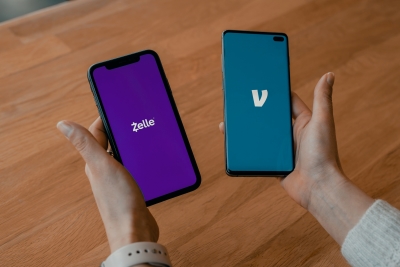
Why Mobile Apps are a Need of Every Business
Mobile phones have made access to everything fast and quick. With just a click we can connect with people more easily and get things done quickly. The game changer for any business is the mobile app which can increase audience and sales. In this blog, we will cover how mobile apps make businesses stronger.
The popularity of smartphones has also increased the demand for a lot of mobile apps. To gain more customers and increase sales businesses are developing more apps and trying to compete in the global market to reach a huge audience.
Role of Mobile Apps:
Increased Sales
Mobile apps help businesses increase sales by making it easier for customers to buy products and gain services on their phones. These Apps can also be used to promote new products and services that the customers might be interested in. By making the app more accessible, businesses can increase sales through the monetization of mobile apps. Apps can increase sales by adding in-app ads, in-app purchases and paid apps. Suggesting the related things customers have bought and what they might like there are chances they will buy that other products too which potentially increases sales of the business.
Brand Awareness
Mobile apps help businesses gain more awareness by making their brand more accessible and visible to customers. This is because people are more likely to use and remember the brand when they are using it on their mobiles. Apps that remain on our screens are more used than those that are not available. Mobile apps also create a positive point in the minds of the customers as they can access them easily and more people are likely to buy the thing when a brand has an app.
Push Notifications
Businesses can send push notifications to the users, even when they are not using the app.This way the brands keep users updated on new content, special offers, or other important information. According to one study, push notifications have an average of 20% open rates 28% click-through rates and 2.1% open rates and 1% click-through rates for email. Notifications keep users updated and it is easier to access. You can just click and enter the app.
Faster loading times
Mobile apps have faster loading times compared to the website. Mobile apps can store data locally on the device, so they don't have to load all of the content from a website every time they are opened. This can lead to faster loading times, which is especially important for users with slow internet connections.
Disadvantages of not having Mobile Apps:
Missed Opportunities
To reach a wider audience more and more people are using their smartphones. To access anything related to the internet including buying stuff, selling stuff and purchasing things. By not having a mobile app, those businesses are missing out on the opportunity to reach a wider audience of customers than those who have mobile apps. Most people prefer to use mobile apps rather than websites as it takes a lot of time.
Reduced Customer Engagement
Mobile apps can be a great way to increase customer engagement. Apps can provide customers with a more easy way to access information and make purchases. Businesses that don't have a mobile app may find it more difficult to engage with their customers.
Increased Competition
In Today's world the competition is getting more and more serious. Many businesses are now offering mobile apps. By not having a mobile app, businesses may be at a competitive disadvantage. Customers may be more likely to choose businesses that offer a mobile app. Brands should have apps so they can compete with the other leading companies and have a good market reputation.
Lost Sales
Mobile apps can be used to sell products and services. Businesses that don't have a mobile app may lose out on sales opportunities. People are more likely to go to brands that have mobile apps because people want easier access to things and want things to be done within seconds.
Importance Decoded in Real-time:
The importance of having mobile apps for the growth of the business can also be seen in real-time. Many brands have mobile apps and they are making good numbers of sales and customers. Some of them are as follows:
1. Amazon
Amazon's mobile app allows customers to browse and purchase products from their phones. The app also sends push notifications to customers about new products, deals, and promotions. The Amazon app has over 197 million monthly active users. Amazon app is available in over 200 countries and territories.
2. Uber
Uber also introduced a mobile app. Uber's mobile app allows customers to request rides from their phones. The app also shows the arrival time of the driver and the fare. It is extremely convenient and most people all over the world use Uber to go anywhere daily.
3. Netflix
Netflix has also introduced a mobile app. Netflix's mobile app allows customers to stream movies and TV shows on their phones or tablets. The app also offers personalized recommendations to users. Netflix has Subscribers all over the world. People buy Netflix subscriptions and get things to watch in one place rather than going to different websites to watch things. It is convenient and easy to access.
These are just a few examples of the many businesses that have used mobile apps to increase sales. There are a lot more mobile apps that have made our lives easier.
Conclusion:
Mobile apps are a must in today's life for business success. Mobile apps contribute to fast business development and gather more reach, as it is handy and available all the time in our hands. With a few clicks, one can acquire knowledge, connect with the world, learn new things and order things online.
For custom software development, visit us at Zee Palm
For free premium front-end flutter kits, visit Flutter Coded Templates
Check out free Flutter Components, visit Flutter Components Library

How Flutter Outshines Native Application Development
Flutter
Flutter is an open-source software development kit (SDK) developed by Google. It enables the developers to build native-looking, high-performance mobile, web, and desktop applications from a single codebase. It uses Dart programming language and includes various widgets and tools.
Flutter is a popular choice for building mobile apps and is also used to build web and desktop apps. Some popular apps built using Flutter include Google Ads, Hamilton, SoundCloud, Pinterest, and Etsy.
Native App Development
Native app development is application specific to Android or iOS. It means that the app is written in the native programming language for the platform, and it uses native APIs and frameworks.
For instance, Android apps are typically written in Java or Kotlin, while iOS apps are written in Swift or Objective-C. Native apps can take advantage of all the features and capabilities of the platform they are designed for, leading to a better user experience.
However, it can be more time-consuming and expensive than cross-platform, it requires separate teams for each platform. Native apps are not as easily portable as cross-platform apps.
How Flutter is Better?
Performance:
Native technologies allow developers to use the platform’s native programming language and tools, resulting in better performance and a native-like user experience.
Flutter apps are built using a single codebase, saving resources like time and money. Flutter apps are developed and deployed quickly and they are more maintainable than native apps, as changes to the codebase can be applied to all platforms at once.
While Flutter apps can provide a good UX they might not perform as well in native-built apps, As Flutter apps run on a Flutter rendering engine which interprets the code at runtime adding overhead.
However, flutter apps can still provide a good performance, especially on newer devices since the performance gap is narrowing between the two technologies as flutter continues to improve.
Speed:
Flutter is generally considered to be faster than native app development because of the single codebase. Flutter provides a fast development cycle, with its hot reload features, any changes made in code will be immediately reflected in the app.
In addition, the Flutter widget library has a variety of customizable UI elements, saving developers time as they do not have to build anything from scratch.
Native apps typically require separate teams for both platforms. The apps must be developed and maintained separately for each platform, this can slow down the development process.
Features and Documentation:
Flutter has a rich set of widgets allowing developers to build unique UI elements. Flutter’s hot reload feature makes it efficient to develop and debug apps. It has a visual layout editor making it easy to design and preview user interfaces.
Flutter has a large and active community of developers and designers who provide support and assistance to each other, contributing to the development of the framework. Although it's a newer technology, there are 167,000+ Flutter-related questions on stack overflow.
Flutter has comprehensive and well-written documentation, covering a wide range of topics from getting started to advanced topics. Flutter documentation is available in multiple languages making it accessible to a wider range of audience.
Native development tends to have more specialized documentation, this can be helpful for developers who are already familiar with the platform but it can be difficult to understand for beginners. They also have less documentation in languages other than English.
Popularity:
Flutter is becoming increasingly popular among mobile developers. According to a recent survey, Flutter is the most popular SDK among developers who are building new apps. As of August 2023, there are over 2.5 million Flutter developers worldwide. Flutter is used by over 150,000 organizations, including Google, Alibaba, and BMW. The Flutter community is growing rapidly, with over 100,000 GitHub stars and over 10,000 new apps released each month.
The popularity of native technologies is declining, A 2022 survey by Stack Overflow found that only 39% of respondents said they would prefer to develop native apps, down from 53% in 2020.
A 2023 report by Statista found that the global market for cross-platform app development is expected to grow from $11.6 billion in 2022 to $21.6 billion in 2027.
Native technologies are losing favor as hybrid technologies like Flutter continue to evolve and become more sophisticated.
Testing and Integration:
Flutter has strong support for testing and continuous integration. It includes a range of tools and frameworks for testing apps at different stages of development such as unit testing, integration testing, and end-to-end testing. Some of the testing tools available in Flutter are:
Flutter driver allows writing automated tests for Flutter apps.
Flutter test provides a range of testing utilities for widgets and other flutter components.
Flutter CI is a continuous integration (CI) service for Flutter apps, it can be used for testing and deployment of Flutter apps.
In addition, Flutter provides integration with a range of external APIs and services, including support for accessing and working with data from external databases and servers.
The best choice for testing and integration will depend on the specific needs and requirements of the project. If it is to be deployed on multiple platforms then Flutter is a very good choice.
Conclusion:
Flutter has emerged as a strong competitor to native development. It presents a modern solution for building and maintaining cross-platform applications. Its single codebase approach streamlines the development process saving time and resources. While native-built apps are faster and more efficient, Flutter’s continuous improvements are bridging the performance gap.
The SDK’s diverse widget library, growing community, and comprehensive documentation further add to its favor. The shift towards hybrid technologies like Flutter can be observed in both developer preferences and market trends. Ultimately the choice depends on project priorities; however, development speed, cost-effectiveness, and appealing features make Flutter a compelling choice.
For custom software development, visit us at Zee Palm
For free premium front-end flutter kits, visit Flutter Coded Templates
Check out free Flutter Components, visit Flutter Components Library

Secrets of a Successful Mobile App
A compelling, efficient, and successful app is one that offers users a meaningful solution to a problem. The app is also often updated with new features and information. It also has an excellent user experience and appealing aesthetics.
Here are some tips for creating an effective mobile app:
1. Concentrate on finding a solution to a real problem:
The first and most crucial tip for creating a successful mobile app is to find a solution to a real problem that your target users are experiencing. This entails identifying their wants and problems, then creating an app that provides solutions in a practical, effective, and user-friendly way.
If your app doesn't actually address a problem, it won't last long. Users will only download and use the apps they find useful out of the millions that are accessible in the app stores.
Example
"Tinder" is a fantastic illustration of this. This dating app has over 50 million active users. By making it simple to browse profiles, match with people you are interested in, and swipe through them, Tinder solves the challenge of meeting new people.
2. Target the right audience:
After determining a genuine issue that your app can address, you must choose the appropriate user base for it. This means having a thorough understanding of your target audience's demographics, interests, and demands.
This can be achieved through market research, user surveys, or simply by conversing with individuals you believe would be interested in your app. The more you understand your intended market, the easier it will be to develop an app that appeals to them.
Example
For instance, the "Headspace" app caters to those who are interested in mindfulness and meditation. The functions of the software are to assist users in unwinding, reducing stress, and enhancing their mental health.
3. Have a great user experience:
Your app's user experience (UX) is essential to its success. To achieve this, make sure your software is simple to use, logical, and visually appealing.
Pay close attention to even the slightest elements, such as your app's layout, text size, and colour scheme. The user should be considered during all design phases.
Example
The "Uber" app, as an illustration, has an extremely user-friendly UI. Requesting a ride, viewing the projected arrival time, and monitoring the status of your ride are all simple processes.
4. Keep your app up to date:
It's important to keep your software updated with the newest features and bug fixes once it has been released. This will guarantee that your consumers are happy and continue to use your software.
To keep your app interesting and new, you should frequently release new features and content.
Example
For instance, the program "UpdateChecker" can assist you in monitoring app changes. When an update for an installed app becomes available, the app will let you know.
5. Promote Your App Effectively:
No matter how fantastic your app is, if no one knows about it, it won't be a success. To reach your target audience and convince them to download your app, you need to properly promote it.
There are numerous ways to advertise your app, including paid advertising, word-of-mouth marketing, and social networking. You may also upload your app to directories and app shops.
Example
One such value proposition is "Learn a new language for free" in the case of the app "Duolingo". The features of the software provide users with a range of languages to choose from and make it simple for them to learn a new language at their speed.
6. Provide excellent customer support:
There will always be users who have queries or issues, regardless of how beautifully your program is developed. For these people to enjoy using your app, it's important to deliver the best customer service. This means answering their inquiries as soon as possible, providing them with useful solutions, and ensuring that they are satisfied with your response.
Example
For instance, the "Slack" software provides excellent customer service. Users can readily contact the company's support staff through phone, chat, email, or other means.
7. Profitably monetize your software:
Once your app has become popular, you'll need to consider how to monetize it. This can be accomplished in a variety of ways, including through in-app purchases, advertising, and subscriptions.
What kind of app you have and who your target market is will determine the best strategy to monetize it.
Example
For instance, the app "Candy Crush Saga" received extensive social media promotion. This encouraged downloads and helped the app become a great hit.
8. Keep developing your app:
To stay ahead of the competition and take advantage of the always-evolving mobile app market, it's important to make continual improvements to your app. This means incorporating new features, correcting issues, and paying attention to user feedback.
By continuously improving your app, you can keep your users engaged and ensure that your app remains successful.
Example
For instance, the "Facebook" app is constantly enhancing its user experience and introducing new functions. This encourages users to stay interested and return for more.
Here are a few successful examples of mobile apps:
Instagram: More than 1 billion people regularly use this photo and video-sharing app. It works well because it makes it enjoyable and simple to exchange pictures and videos with loved ones.
Netflix: There are more than 209 million users of this streaming service. It is prosperous since it provides a large selection of films and TV series and is always introducing new material.
TikTok: It is a very well-liked video-sharing app, especially among young people. It boasts more than 1 billion active users and enables users to produce and share brief videos.
Google Maps: It's a must-have navigational tool. Users can use it to receive directions, locate their way around, and view real-time traffic updates.
Amazon: It is a fantastic resource for shopping for whatever you would need. It has a huge selection of products and offers practical delivery alternatives.
WhatsApp: Another well-liked option is this texting app, which has more than 2 billion users. Users can send voice messages, photographs, videos, and text messages for no cost.
Even if it's difficult, it is possible to build a profitable mobile app. You can improve your chances of success by paying attention to the above-mentioned tips.
For custom software development, visit us at Zee Palm
For free premium front-end flutter kits, visit Flutter Coded Templates
Check out free Flutter Components, visit Flutter Components Library
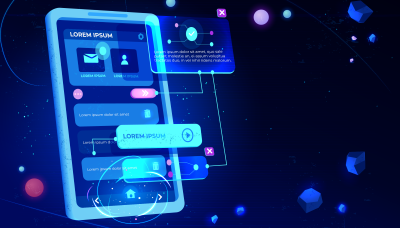
Mobile app development trends to watch in 2024
With more apps being created and a larger client base for enterprises, the mobile app development market is flourishing. We all heavily rely on and use smartphone apps for daily tasks. But have you noticed how quickly technology has assimilated into our daily lives? This might be attributed to the industry's ongoing progress as it strives to create incredible mobile applications and new features every day. Therefore, trends in mobile app development are directly influenced by the development of software technology, user demand, and other relevant variables.
Top Mobile App Development Trends
To incorporate the most recent developments and satisfy customer expectations for features, functionality, and user experience, developers and organizations must stay updated with these mobile app development trends.
1. Rise of 5G Technology:
For many customers, 5G is synonymous with the technology that powers the most recent iteration of smartphones—devices with improved connectivity and performance. Additionally, 5G has undoubtedly changed mobile communications, but its impact goes far further. A variety of commercial and consumer applications are expected to be transformed by 5G technology, creating new opportunities.
5G is revolutionizing every industry, from marketing and manufacturing to medical and the metaverse, by bringing improvements in speed, latency, capacity, and reliability.
Some of the key points that are being covered in 5G Technologies are:
- Improved Internet Access For Global Employees
- New And Enhanced Fintech Applications (And Challenges)
- Adoption Of Cloud-Native Tech In The RAN
- Breakthroughs In Automotive Travel
- Dynamic Bandwidth Allocation
- Enhanced Collaboration Through Global Data Delivery
- Rapid Growth Of AI
- Real-Time Data Analytics
- Transformation Of Manufacturing Processes
2. Apps for Foldable Devices
Mobile phones that extend into a double-sized screen and offer plenty of room for multimedia and many apps are sometimes referred to as "foldable." Users gain from portability without sacrificing screen size thanks to foldable technology. These futuristic devices, which have flexible OLED screens, offer flexible, cutting-edge user experiences.
Optimizing Existing Apps for Foldable Devices:
It might be tempting to construct brand-new apps exclusively for foldable smartphones given the new possibilities and the freedom for innovation, and while that is excellent, it is equally crucial to optimize current programs for these interfaces. Here are a few causes for this.
- User Expectations
- Consistency Across Devices
- Expanding User Base
- Leveraging New Capabilities
Potential Challenges:
While it's true that the advent of folded mobile phones has opened up a whole new world of possibilities, it's also important to note that the development of foldable apps has its own unique set of difficulties.
- Adapting to Multiple Screen Sizes and Layouts
- Continuity of User Experience
- Testing and Debugging
- Optimizing Performance
- App Compatibility
- Increased Cost and Development Time
3. Internet of Things (IoT) App Integration
IoT, or the Internet of Things, is not a recent concept. It ultimately comes down to giving commonplace devices Internet access and giving them intelligence. Given that we rely on several devices, each of which needs to be connected to the Internet, this has become a need of daily life. Additionally, the widespread use of mobile devices in a variety of industries and fields has created endless opportunities for the IoT.
And what's this? This technology is being incorporated into mobile apps by developers. With this, you can easily use a single app on your smartphone to control and monitor your Internet of Things (IoT) devices.
Making data and applications that were separately developed function nicely together is integration. When implementing end-to-end IoT business solutions, IoT integration refers to making the combination of new IoT devices, IoT data, IoT platforms, and IoT applications combined with IT assets (business applications, legacy data, mobile, and SaaS) — function well together. The collection of IoT integration capabilities that IoT project implementers require to successfully integrate end-to-end IoT business solutions is referred to as the IoT integration market.
Use Cases of IoT:
Lighting, cooling, security systems, and other building operations can be automated with IoT. IoT solutions increase the productivity of industrial manufacturing processes while reducing the demand for physical labour. Cities can be interconnected via IoT technology to cut waste and increase access to public resources.
An example of the Internet of Things IoT is Wearable technologies. Smartwatches are one of the most typical Internet of Things instances. Fitbits and Apple Watches are examples of wearable IoT devices that connect to other devices (like your smartphone) to share data. To track GPS positions, they frequently connect to the internet as well.
4. Augmented Reality (AR) and Virtual Reality (VR)
Virtual reality (VR) and augmented reality (AR) are also altering the field of mobile app development. By superimposing virtual features on the actual world, augmented reality (AR) technology improves user experiences and makes it possible for applications like virtual try-ons for shopping or interactive gaming. While giving chances for virtual tours, virtual training, and immersive entertainment experiences, VR technology immerses users in virtual settings.
If we look at us today, we can see many examples of brands enhancing user experiences via AR and VR. For instance, IKEA uses augmented reality (AR) technology to let customers picture furniture in their homes before making a purchase. Users can virtually put on glasses at Lenskart to see how they look before making a purchase.
Even industry behemoths like Apple, Google, and Meta are advancing AR and VR significantly. Through the use of their camera, users may watch directions in real-time overlaid on the outside world thanks to a feature called "Live View" that Google added to Google Maps. LiDAR, which Apple describes as "AR at the speed of light," is another significant leap in AR technology. Devices like the iPad Pro, iPhone 12 Pro, and iPhone 12 Pro Max introduced this technology. Because LiDAR makes it possible to shoot high-quality pictures even in dim lighting, AR has reached new heights.
We can expect AR and VR to have an unimaginable impact on the mobile app development market in the upcoming year. Mobile app development trends will increasingly use these technologies, opening up exciting new opportunities for both consumers and developers.
5. Beacon Technology
When you're close by, beacons, which are tiny Bluetooth devices, send signals to your smartphone. This creates a myriad of new opportunities for location-based interactions and services. Beacons can aid in the optimization of marketing initiatives and the attracting of additional customers by identifying potential customers close to your location. For instance, Beacons can recognize a user's smartphone app when they enter a parking lot and deliver updates with information about current sales or tailored offers. The likelihood of that customer visiting the store and making a purchase rises as a result. Contactless marketing with beacons greatly improves customization in comparison to conventional marketing channels and raises conversion rates.
Retailers can also monitor customer behavior and produce precise maps of customer paths through the store. Effective marketing campaigns may be created using this information, such as where people spend their time and what things they buy and when.
However, very few businesses are utilizing the full potential of beacon technology in their apps. The developer will soon employ this technology to create apps with intriguing features like location-based experiences. It will be one of the incredible trends in mobile app development given its many advantages.
6. Artificial Intelligence (AI) and Machine Learning (ML)
The combination of artificial intelligence (AI) and mobile app creation has completely changed how we use smartphones. Mobile apps that incorporate artificial intelligence (AI) make use of machine learning algorithms to comprehend user behaviour, offer individualized recommendations, and present intelligent and contextually aware experiences.
Features like voice recognition, natural language processing, image and facial identification, and predictive analytics are made possible by AI in mobile apps, increasing user satisfaction and engagement. Additionally, AI helps to automate routine chores, enhance app performance, and enable intelligent virtual assistants.
The incorporation of AI into mobile app development enables programmers to produce original, clever, and user-focused applications. By responding to user demands, these applications transform our mobile gadgets into really intelligent companions.
AI and ML's Place in Mobile Development
The AI blend that you want to add to your mobile app depends on how it is used. Mobile app development depends heavily on artificial intelligence and machine learning. They will assist your app in fully revolutionizing the idea of mobile applications and performance.
These are some of the major functions that artificial intelligence performs in mobile applications.
- Personalization
- Intelligent Automation
- Predictive Analytics
- Enhanced Security
- Automated Testing
- Image and Speech Recognition
7. Cloud-Based Mobile Applications
The internal memory of a mobile device frequently has to accommodate a large amount of storage for apps that use cutting-edge technology like artificial intelligence, machine learning, and the Internet of Things. Users, however, prefer not to download programs that take up several gigabytes on their devices.
Fortunately, cloud computing provides a practical answer to this issue. Apps can make use of the required storage space without using up the restricted internal memory of a mobile device by using distant servers. The cloud-based mobile app is the newest craze in 2023, and its creation is receiving increasing attention.
The cloud-based mobile application offers faster operations, enhanced computational power, better storage and loading capacity, and secure performance across numerous devices. These benefits are motivating more providers to aggressively invest in the creation of cloud-driven apps. This trend has emerged in the age of cloud mobile computing when creative and effective mobile app experiences are delivered by utilizing the strengths and capabilities of the cloud.
8. Cross-Platform Mobile Development
The two most popular mobile app operating systems are Android and iOS, which account for 67.56% and 31.60% of the market share, respectively. Due to the widespread use of these OS in the mobile industry, it is most cost-effective for businesses to create cross-platform apps that work on both Android and iOS devices.
Although it has been around for a while, cross-platform mobile app development is now one of the hottest trends in the industry. This trend in mobile app creation has grown as a result of users' preferences and propensity for such apps. Businesses may reach a wider audience, cut down on development time, and minimize costs for app launch thanks to its many benefits. Additionally, they can guarantee that everyone can use the generated mobile app.
To fully utilize its potential, the mobile app can be tested on a cloud-based platform like LambdaTest. You may test your mobile apps using a cloud-based digital experience testing platform on a variety of actual browsers, operating systems, and devices. This will assist you in conducting mobile app testing to make sure your app runs properly and displays as intended across a range of mobile devices.
Many more trends have been followed and will be used in future such as:
- Double Down on Motion Design
- Extended Reality (XR)
- Touchless UI
The mobile app market is constantly changing in 2023 and will change by 2024. New trends in mobile app development will emerge or existing ones will be leveraged with exciting new additions. Following the latest trends improves our experience and aids companies in maintaining an advantage over rivals in the mobile app industry.
For custom software development, visit us at Zee Palm
For free premium front-end flutter kits, visit Flutter Coded Templates
Check out free Flutter Components, visit Flutter Components Library
How Mobile Apps are Transforming the Healthcare Industry?
The healthcare digital revolution, spurred by data, mobile tech, and AI, gained momentum in the pandemic. Apps track COVID-19, AI aids diagnosis. Beyond, it betters nursing, disease care, resource use, and enhancing health systems. Explore how mobile apps reshape healthcare in this blog.
The global digital health market was estimated to be worth USD 85.06 billion in 2019 and is projected to be worth USD 230.94 billion by 2026, according to the research report "Digital Health Market by Component" (Software, Hardware, and Services), By Technology Digital Health Systems, Tele Healthcare, and Healthcare Analytics. The global market for digital health is projected to grow at a CAGR of 14.9% between 2019 and 2026.
“I think the biggest innovations of the 21st century will be at the intersection of biology and technology. A new era is beginning.”
– Steve Jobs
Empowering Patient Engagement:
Breaking down the barriers that exist between patients and health care is made possible in a significant way by mobile apps. As we already know, mobile applications simplify our lives by facilitating global connections. They also give us the ability to store and conveniently access countless records. The healthcare division benefits from this element as well. In these situations, several apps put health information at your doctor's fingertips, allowing them to retrieve your records in case you ever require emergency medical attention. it genuinely could save your life. Furthermore, programmes have made it simpler to track and monitor your health. They can monitor your heart rate, blood oxygen levels, daily step total, and even the number of calories you burn.
Almost two-thirds of Internet users used the Internet to search for health information (64.9%), searching for information about doctors and medical services (63.4%), or searching for a medical facility (65.3%).-A National Web-Based Cross-Sectional Survey among Adults in Poland.
Revolutionizing Medical Diagnostics:
As we learned earlier mobile apps are helping patients and doctors as well to better treat health issues. In addition, today the apps have revolutionized the medical diagnosis process by making it easier and faster than ever before. Here are some specific examples of how AI is revolutionizing medical diagnostics:
- AI-powered microscopes can identify cancer cells with greater accuracy than human pathologists. This is leading to earlier diagnosis and treatment of cancer, which can improve survival rates.
- AI-powered algorithms can detect signs of Alzheimer's disease from brain scans years before symptoms appear. This could lead to earlier treatment and prevention of the disease.
- AI-powered wearable devices can monitor a patient's vital signs and track their progress over time. This can help to identify changes in health status that may indicate a developing disease.
- AI-powered chatbots can provide patients with information and support about their medical conditions. This can help to reduce the burden on healthcare providers and improve patient satisfaction.
Let’s check some applications that are making medical diagnoses available on your mobile phones.
- HealthTap: HealthTap is one of the top-rated medical apps on the Google Play Store. It enables you to get in touch with doctors 24/7.
- Ada: The AI of the Ada app compares your responses to its medical dictionary, which contains thousands of illnesses and conditions. You get a personalized assessment report that outlines what might be wrong and what you can do moving forward.
- WebMD: It provides those who want knowledge with useful health information, health management tools, and assistance.
As technology advances and enhances our lives in better and more effective ways, our future is changing day by day. Additionally, the health sector is rapidly improving in terms of speed, accuracy, and accessibility. Even the diagnosing procedure has been made easier and faster recently.
Telemedicine:
Using information technology and communications to deliver medical care remotely is known as Telemedicine. It makes it possible for medical staff to consult with and treat patients who are in distant locations frequently without requiring them to leave their homes or travel to a facility for treatment. Telemedicine has a wide range of applications including:
- Virtual Care: For non-emergency care, such as a sinus infection, flu, headache or sore throat patients can use telemedicine to consult a physician.For those who live in remote areas where access to hospitals and doctors is difficult this is a very practical and favourable opportunity for them.
- Mental health care: Telemedicine is being used to deliver mental health services such as treatment and counselling. People who live in remote areas find it difficult to commute to see a therapist. This helps them to communicate without leaving their homes and get the help they need.
- Chronic care management: Telemedicine can be used to help treat and monitor diseases like diabetes or high blood pressure by regularly monitoring the patient’s vital signs through calls or apps that are made to check pulse rate etc
- Education and training: Telemedicine can be used to provide education and training to healthcare professionals. This can include continuing education courses, as well as training for new healthcare providers.
- Research: Telemedicine can be used to conduct research in healthcare. This can involve remote monitoring of patients, as well as video or phone consultations with researchers.
Some telemedicine apps are quite popular which you can check out to help you in any circumstances regarding your health or your loved ones.
- MDLIVE: It allows you to connect to adult and pediatric doctors and access behavioral health therapy services and psychiatry whenever you need them.
- Lemonaid: The Lemonaid app offers a simple way to get a diagnosis and receive treatment.
- LiveHealth: It brings qualified doctors to you whenever you need them.
Personalized Wellness and Fitness:
Personalized wellness is a method of promoting health and well-being that takes into consideration each person's particular needs, objectives, and preferences. It makes individualized exercise and health tracking plans, as well as well-being plans, using data and technology. Personalized wellness can be used to track fitness and health in the following ways, as examples:
- Your heart rate, sleep patterns, and steps can all be monitored by a fitness tracker. Using this information, you may design a personalized exercise programme that is catered to your unique needs and goals.
- You can monitor your nutrition, weight, and blood pressure with a health app. You can use this information to develop a tailored nutrition plan that will assist you in achieving your health objectives.
- A training professional can evaluate your state of fitness and design an individual training programme that is both safe and efficient for you.
- You can set reasonable health objectives with the help of a health coach, who will also offer guidance and assistance as you go.
Medication Management:
Taking your prescriptions as your doctor has instructed is known as medication management. You can stay on top of managing your medicine schedule with the use of digital tools and services, such as adherence programmes, record-keeping applications, and reminders to take your medications.
You can improve your medication management in addition to using digital tools by consulting your doctor about your medication requirements, creating a medication schedule, keeping your medications in a secure location, and ensuring you have enough medication on hand to last until your next refill. For mental health, medication management might be difficult. Many apps and online tools, including those for emotional well-being, stress relief, and support networks, can help with medication management for mental health conditions.
The Future of Healthcare Apps:
Healthcare apps will become more personalized, remote, and virtual. They will use data and analytics to create personalised treatment plans, track health data remotely, and provide access to healthcare providers from anywhere in the world.
1. Integration of AI and Predictive Analytics
- AI and predictive analytics will be used to develop new diagnostics, treatments, and preventive measures that are more effective and personalized than ever before.
- AI will be used to automate tasks, diagnose diseases, personalize treatment, and predict disease risk.
2. Envisioning a Holistic Health Ecosystem
- The future of healthcare is holistic. It is about more than just treating diseases. It is about promoting health and well-being at all levels, from the individual to the community.
- A holistic health ecosystem would integrate physical, mental, and social health. It would also incorporate traditional and alternative medicine.
The future of healthcare is bright. By integrating technology, AI, and predictive analytics, we can create a holistic health ecosystem that promotes health and well-being for all.
Success Stories:
Here are some examples of healthcare apps that have driven positive health outcomes and improved quality of life for users:
- DiabetesMine is an app that helps people with diabetes manage their condition. The app provides users with access to a community of other diabetics, as well as educational resources and tools to help them track their blood sugar, medication, and diet. A study published in the journal JMIR Diabetes found that users of DiabetesMine were more likely to meet their blood sugar goals than those who did not use the app.
- QuitSure is an app that helps people quit smoking. The app provides users with personalized coaching, support groups, and mindfulness exercises to help them stay on track. A study published in the journal PLOS One found that users of QuitSure were more likely to quit smoking for at least six months than those who did not use the app.
- Headspace is an app that provides guided meditation and mindfulness exercises. The app has been shown to improve mental health symptoms such as anxiety and depression. A study published in the journal JAMA Psychiatry found that users of Headspace were more likely to report a reduction in symptoms of anxiety and depression than those who did not use the app.
For custom software development, visit us at Zee Palm
For free premium front-end flutter kits, visit Flutter Coded Templates
Check out free Flutter Components, visit Flutter Components Library

Top 10 Learning Resources for Software Developers.
The scope of software development is vast and ever-expanding. With the rise of new technologies and the fast-moving era, the demand for software has increased significantly with this the urge to learn software development grows as well. There is a wide range of opportunities for software developers in various fields and industries.
Software developers get to be creative and opt for a challenge making it interesting for learning and it is a well-paying field that encourages people even more.
There are numerous learning resources available for software developers of all levels. These resources can help you learn new skills, improve your existing skills, and keep you updated on the trends in software development.
Here are 10 of the best learning resources for software developers in 2023:
1. Udacity

Udacity offers a wide range of online courses and nano degrees in software development including courses in Cloud Computing, Machine Learning, Artificial Intelligence, and Web Development.
Udacity was founded in 2011 by Sebastian Thrun, Peter Norvig and Mike Soklosky. It has over 14 million users. Udacity courses and nano degrees are taught by industry experts and cover a wide range of topics. Nanodegrees has more structured learning which helps to advance more in a specific field and get jobs. Udacity has partnered with large companies including Facebook, Amazon, IBM, and Google which helps people to get well-prepared for the working industry. They offer video lectures, interactive exercises, recordings, and hands-on projects. Udacity is a great place for learning.
Some of the most popular Udacity Nanodegree programs for software development are:
- Full Stack Web Developer Nanodegree
- Android Developer Nanodegree
- IOS Developer Nanodegree
- Python Developer Nanodegree
- Data Science Nanodegree
2. Stack Overflow

Stack Overflow is a great resource for software developers who need help with specific problems. While not a traditional learning platform, Stack Overflow is a sea of knowledge for developers. Developers can ask questions, answer questions of people and learn from the experiences of other developers in the field. The community is always willing to help and the website has a wide range of questions and answers on every topic.
Stack Overflow was founded in 2008 by Jeff Atwood and Joel Spolsky. Stack Overflow has over 20 million registered users. The site receives over 100 million monthly visits from people on average.
The site has replaced the day-to-day programming reference from books and made it easier for programmers to learn new things from others and be able to improve themselves by answering questions from different people and learning about many more new things and tools through Stack Overflow. It helps developers to stay up to date about programming trends and improve by getting feedback.
Some of the most popular programming languages and frameworks on Stack Overflow are:
- JavaScript
- Python
- Java
- Spring Boot
- Django
3. Coursera

Coursera offers similar courses to Udacity. They offer a wide range of programming courses which are taught by instructors from top universities and institutions. The platform covers high-quality courses and professional degrees like Data Science, Machine Learning, different Programming Languages and Artificial Intelligence.
It was founded in 2012 by Andrew Ng and Daphne Koller, two Stanford University computer science professors. They have over 100 million registered students. Coursera was the first online learning platform that offered courses from top universities. They have partnerships with more than 275 universities and companies like Stanford University, the University of Michigan, Yale, Google, and IBM.
Here are some best courses and degrees related to software development that Coursera offers:
- Software Engineering Specialization from the University of Michigan
- IBM Full Stack Software Developer Professional Certificate
- Google IT Automation with Python Professional Certificate
- Data Structures and Algorithms Specialization from Stanford University
- Software Engineering Degree from the University of Toronto
4. YouTube

Youtube is a great source for learning Software development.There are many channels on youtube that offer courses, tutorials and YouTube is a great source for learning software development. Many channels on YouTube offer courses, tutorials, and other resources for software developers of all levels. YouTube is a goldmine for learning programming.
It was founded by Steve Chen, Chad Hurley, and Jawed Karim on February 14, 2005. YouTube is owned by Google and has more than 2.7 billion monthly active users. YouTube offers a wide range of resources for developers. Almost every topic is discussed and has a variety of videos, podcasts and playlists on it. If you have a problem related to anything you can easily find it on YouTube.
Here are some YouTube channels related to software development:
- Fireship
- The Net Ninja
- Andy Sterkowitz
- Alex Hyett
- ArjanCodes
- CodeWithHarry
5. Medium

Medium is a great resource for reading articles and tutorials on software development. Medium is a publishing platform that allows anyone to write and share their thoughts with the world. It has a wide range of content, from essays to blogs to technical tutorials. Whether you’re a beginner or an advanced developer, Medium can help you reach to wider audience. It is a great place to learn about new trends and stay up to date.
It was founded in 2012 by Evan Williams, the co-founder of Twitter. Medium has somewhere between 85 and 100 million monthly active users. If you are facing any problem related to programming you can find a wide range of resources.
Some of the blogs related to Software Development are :
- Better Programming
- Codeburst
- ITNEXT
- Code Like a Girl
- Dev.to
6. edX

edX is another popular learning platform that offers a wide range of courses, programs and nano degrees and covers topics like machine learning, artificial intelligence, and cloud computing. edX also offers several microMasters programs that can help you earn a certificate in a specific area of software development.
Similar to Coursera, edX partners with universities and organizations to provide great programming courses. It was founded in 2012 by MIT and Harvard University. There are more than 40 million users according to research in 2020. The platform also offers free courses that allow developers to learn at their own pace.
Some of the courses, programs and nano degrees related to software development are:
- Data Structures and Algorithms Specialization
- Software Engineering Specialization
- Full Stack Web Developer Nanodegree
- Google IT Automation with Python Professional Certificate
- Master of Computer Science in Software Engineering
7. GitHub

GitHub is a code-hosting website that is used by millions of developers around the world. GitHub is a great place to look for open-source projects, learn from other developers and get knowledge about new trends. You can join Github communities, and help others by tracking errors from their codes and by collaborating on projects. It was founded in April 2008 by Tom Preston-Werner, Chris Wanstrath, and PJ Hyett. The platform has Around 100 million users.
GitHub Learning Lab offers hands-on tutorials to help developers learn Git and GitHub through practical exercises. It is not just a code repository but also a dynamic place that helps in learning networking and advancing your skills as a software developer.
Here are some famous frameworks, operating systems, and programming languages on GitHub:
- React Native
- AngularJS
- JavaScript
- Python
- Java
8. Pluralsight

Pluralsight is a subscription-based learning platform that also offers a wide range of courses on software development taught by industry experts and the courses are for beginners as well as for advanced programmers. Pluralsight has over 7,000 courses on software development that cover a broad spectrum of technologies, including cloud computing, cybersecurity, and DevOps practices. Whether you are looking for help or to learn new skills, Pluralsight is a user-friendly website eager to help users with learning at their own pace.
It is a privately held company that was founded in 2004 by Aaron Skonnard, Keith Swenson, and Ryan Gabbert. They have around 2 million users.
Some of the popular courses related to software development are:
- JavaScript: The Big Picture
- React: The Complete Guide
- Angular: The Complete Guide
- Python for Data Science
- Machine Learning for Absolute Beginners
9. FreeCodeCamp

FreeCodeCamp is also another website for software developers who want to learn for free. FreeCodeCamp offers all the basics of software development from HTML and CSS to JavaScript and React. For beginners to experienced developers, FreeCodeCamp offers a wide range of tutorials, challenges, and projects. They provide hands-on coding and challenges that engage developers to learn and complete courses. They also provide certificates to the people who complete their courses. If you are having any problem with challenges you can go to their YouTube channel and learn from there.
It was founded in 2012 by Quincy Larson. It is a non-profit organization and its goal is to help people learn to code and get jobs in the tech industry. Free Code Camp has around 4 million active users.
Some of the courses related to software development that they offer are:
- Front-End Development
- Back-End Development
- Data Visualization
- Full Stack Development
- Cybersecurity
10. Books

Of course not forgetting the most traditional source of learning for any developer. There are a lot of great books to refer to if you are looking for something to learn or even if you are a beginner. There is always something new to learn from books. You can find books that cover a wide range of topics related to software development, from coding best practices to software architecture. They are all written by experienced software developers and engineers, and they offer valuable insights into the world of software development. Clean code is a must for software developers who want to be better at coding.
Here are some famous Books related to Software Development:
- Clean Code: A Handbook of Agile Software Craftsmanship by Robert C. Martin (Uncle Bob)
- The Pragmatic Programmer: From Journeyman to Master by Andrew Hunt and David Thomas
- Design Patterns: Elements of Reusable Object-Oriented Software by Erich Gamma, Richard Helm, Ralph Johnson, and John Vlissides (Gang of Four)
- The Mythical Man-Month: Essays on Software Engineering by Frederick P. Brooks Jr.
- Clean Architecture: A Craftsman's Guide to Software Structure and Design by Robert C. Martin (Uncle Bob)
In the forever loop of learning, there are a lot more resources like websites, books, blogs and podcasts from which a software developer can refer. From Twitter to Udemy, there are a million sources. As the field is ever-evolving, there are going to be more changes and more useful resources to come in the future, so keep yourself updated on the latest trends.
For custom software development, visit us at Zee Palm
For free premium front-end flutter kits, visit Flutter Coded Templates
Check out free Flutter Components, visit Flutter Components Library
Top 10 Tech Stacks for Development
A tech stack offers a structured approach to software development, leveraging existing tools, libraries, and frameworks for efficient and reliable programs. It is the optimal choice for building scalable and maintainable systems, allowing independent updates to stack components.
To compose front-end and back-end elements, the tech stack is vital. The front-end presents visual content using scripting languages like JavaScript, HTML, and CSS. The back-end manages user requests and data, involving databases (e.g., MySQL), server-side languages (e.g., Python, Ruby), and APIs for communication. The chosen tech stack influences app possibilities, customization, and resource requirements.
Main Elements of a Tech Stack:
- User interfaces, made with languages like HTML and CSS
- Programming languages, such as Python, Ruby, PHP or Java
- Frameworks, including Express, Spring and Django
- Runtime environment, including Node.js and JRE
- Servers, which include Apache and Nginx
- Databases, such as MongoDB and MySQL
In this blog, we will learn about the top 10 stacks used for software development
Top 10 stacks used for software development in 2023
1. LAMP STACK
Popular open-source software called the LAMP stack is mainly used in web development. A fully working web development environment can be created using the LAMP stack, which consists of four components. LAMP is an acronym created from the initial letters of the component names:
- Linux is the operating system that the other components run under.
- A web server programme used to deliver static web pages is called Apache HTTP Server.
- Among other things, MySQL is a relational database management system used for data warehousing, application logging, e-commerce, etc.
- Web applications are made using programming languages like PHP, Perl, and Python.
Benefits of LAMP for software development:
LAMP Stack software development offers several benefits, including:
- Open-source: LAMP Stack is available for usage and modification by anybody. This makes it the perfect option for new companies and small organisations with tight budgets.
- Flexibility: Due to its high flexibility and ability to be tailored to your company's unique requirements, LAMP Stack is a great choice. To accommodate the expansion of your organisation, you may quickly add or delete functions.
- High performance: The LAMP Stack is renowned for its outstanding performance, so even in the face of enormous traffic, your website or application will load swiftly and without a hitch.
- Large developer community: There are numerous resources available if you need assistance or support because the LAMP Stack has a sizable development community.
2. ASP.NET STACK
.NET is an open-source platform with tools, programming languages, and libraries for crafting modern desktop, web, and mobile apps. It operates smoothly across various operating systems. Supported languages include C#, F#, and Visual Basic, alongside compatible third-party options. Known for ease, code reuse, strong performance, security, and community backing, .NET is a top-tier development choice.
Benefits of .NET for software development:
The following are some advantages of.NET Stack web development:
- Cross-platform development: From lightweight web apps to robust enterprise solutions, .NET caters to all. Its standout feature lies in enabling code creation and execution across diverse platforms through a unified programming environment and toolset.
- Rich resources and libraries: Accessible libraries and user-friendly management tools are strengths of.NET. Developers may elevate their projects with a wealth of reusable open-source code, components, and modules.
- High security and reliability: Microsoft protects the security and dependability of .NET by officially endorsing it, offering recommendations, and responding to dangers when they materialise.
- Access to skilled developers: One of the main advantages of the .NET framework for years has been the big market and easy access to qualified talent. There are between 5 to 8 million .NET developers worldwide, and many of them are senior professionals with over 10 years of experience using and developing this technology. This is wonderful news for anyone trying to hire a team of .NET engineers who have a successful track record.
3. MEAN STACK
One of the most well-known technology stacks is the MEAN Stack. An entire stack of web applications can be created using it. The JavaScript language serves as the foundation for all of the technologies, despite the stack's diversity.
MEAN Stands for:
- M – MongoDB
- E – Express
- A – Angular
- N – Node.js
Benefits of MEAN for software development:
The following are the benefits of MEAN Stack software development:
- Full-Stack JavaScript: The fact that JavaScript is utilised for both the front-end and back-end of web applications is a significant benefit of MEAN stack development. This improves the effectiveness and modernity of development.
- Open Source: All of the MEAN stack's components are open source, so there are no licensing costs to worry about while using them. Additionally, it enables the customization of any component to meet unique requirements.
- Scalability: In contrast to Node.js, which is made specifically for building scalable server-side applications, MongoDB is a robust and scalable database system. For creating complex online apps, the MEAN stack is a great choice.
- High Performance: High performance is offered by MEAN stack. This is made possible by Node.js' asynchronous nature, which makes it simple for it to manage numerous concurrent connections. Furthermore, AngularJS usage speeds up the loading of single-page applications.
- Flexibility: When it comes to web development, the MEAN stack offers a lot of flexibility. This is made possible by the fact that every component is made to function together perfectly. Each component can also be used alone, enabling the selection of the best tools for a given situation.
- Improved Productivity: When developing online apps, the MEAN stack can also help to increase productivity. This is because it uses JavaScript for both front-end and back-end development. Because of this, the application's two components may be written in the same language, saving a tonne of time.
- Cost Effective: The MEAN stack is inexpensive since all of its components are open-source and free to use. Furthermore, the MEAN stack may be utilised to construct large-scale applications at a low cost.
- Improved Security: Since all of its components are open-source, the MEAN stack provides better security. This implies that a group of developers may examine the code and find any potential security holes. Utilising MongoDB also enhances the security of the data kept in the database.
4. MERN STACK
The MERN Stack is a collection of four various technologies that collaborate to create dynamic websites and web applications. It is a contraction for four different technologies as mentioned below:
- M - MongoDB
- E - ExpressJS
- R - ReactJS
- N - NodeJS
Benefits of MERN for software development:
MERN Stack software development offers several benefits, including:
- Top-Notch Web Applications: The MERN stack is optimal for companies seeking top-tier web apps. By merging high-performance and flexible technologies, it facilitates swift web app and software development.
- Open Source: MERN is a favoured pick for startups, owing to its open-source essence and global upgrades. A standout trait is its end-to-end open-source design, ensuring reliable online apps. AngularJS, an open-source frontend framework, accelerates coding with enriched HTML and JavaScript capabilities.
- Full Stack Development: MERN uses a full-stack development approach, which necessitates the creation of both the front end and the back end of an application. This strategy combines ideas from software engineering and user interface design. Due to its potential for cost savings, it has become more and more popular among startups.
- Native-Like Experience: Mobile apps built on MERN can effortlessly handle offline-online data syncing, utilise native capabilities like the camera, and monetize more easily.
- Personalised User Experience: A MERN Stack developer can take advantage of a wide range of customization possibilities, especially for the front-end platform, making it simple to modify the user experience without resorting to back-end controls. As a result, the user experience is tailored.
- Scalable & Cloud Compatible: Since data is constantly being contributed to all platforms, scalability is never a problem. MongoDB, a scalable NoSQL database compatible with cloud storage, is a component of the MERN stack. While Node.js makes the most of processing power, making platform data administration simple and accessible from anywhere in the world.
5. MEVN STACK
Like MERN and MEAN, MEVN is also a web stack, however, it is more recent due to the front-end technology it uses, Vue.JS. The front-end technology utilised in each of these stacks is different, and that is the only distinction between MEAN, MERN, and MEVN.
For the creation of user interfaces, MEVN makes use of Vue.JS, another open-source framework. Vue is quick and simple to learn, but because it is more recent, there is less community help available.
Benefits of MEVN for software development:
Some benefits of MEAN Stack software development include the following:
- JavaScript: The main benefit of MEVN is the usage of javascript at every stage of development, from client-side to server-side, which streamlines the procedure and speeds up development.
- Easier: Faster and simpler to learn is Vue.JS.
- Back-end MVC architecture: It organises the server side, making back-end development quicker and more effective.
- Independency: It is independent of platforms.
6. RUBY ON RAILS STACK
A framework for creating apps, Ruby on Rails is open-source and free. Because it is now the most well-known framework for the Ruby functional programming language, it enjoys a lot of popularity.
Benefits of RUBY ON RAILS for software development:
Some benefits of Rails Stack software development are:
- Fast Development: Ruby on Rails makes application development more rapid. Developers can quickly create app functionalities with the help of readily available frameworks and plugins (known as gems). Also, open source is a sizable portion of the code base.
- Adherence to Coding Standards: Ruby on Rails allows developers to create high-performance software applications more quickly since it adheres to standardised code and application design conventions.
- Scalability: With more user requests, Ruby on Rails performs better because, unlike client-server applications, server-side code may directly process user requests without the usage of any external web services.
- Maintenance and Testing: Model-view-controller (MVC) architecture is used in Ruby on Rails. Tests and maintenance of the code are made easier by the separation of business logic into models and views in HTML, XML, etc. Additionally, it aids programmers in using asynchronous programming methods for creating dynamic websites.
- Security: Over time, Ruby on Rails has developed. With the current stable version's numerous integrated security methods, web application developers can create programs that are resistant to hacker attacks and other vulnerabilities. The Ruby on Rails framework provides a defence against social engineering attacks, cross-site scripting, SQL injections, and other threats.
7. PYTHON STACK
Python is a high-level, all-purpose programming language that is frequently used in the creation of applications. Python is frequently used for machine learning, AI, data analysis, and scientific computing.
Benefits of PYTHON for software development:
Benefits of Python Stack software development include the following:
- Versatility: Python's wide range of applications spans web development, data analysis, scientific computing, AI, machine learning, automation, and more.
- Readable Syntax: Python's clear and intuitive syntax emphasises readability, reducing the learning curve and aiding collaboration.
- Rapid Development: Python's interpreted nature allows quick code modification and execution, promoting fast-paced development.
- Vast Library Support: Python's extensive standard library and third-party packages accelerate development by providing pre-built functionalities.
- Web Frameworks: Widely-used frameworks like Django and Flask simplify web application development with robust features.
- Community and Resources: Python boasts an active and supportive community, offering abundant resources, tutorials, and documentation.
- Cross-Platform Compatibility: Python runs seamlessly on various platforms and operating systems, ensuring broad accessibility.
8. JAVA STACK
Another extensively used enterprise-level programming language that has been around for a while is Java. It features a sizable developer community and a wealth of frameworks, libraries, and tools that make development easier. The Java programming language, the Spring framework, and a database system make up the three parts of the Java stack. Java is an object-oriented platform-independent programming language, which means that the code can execute on any machine, regardless of the operating system.
Benefits of JAVA for software development:
The following are the benefits of JAVA Stack software development:
- Platform Independence: Java's platform-independent nature enables code execution on various machines, regardless of the operating system.
- Enterprise Development with Spring: The Spring framework facilitates modular, lightweight enterprise application development, covering web, security, data access, and testing.
- Diverse Database Options: Java developers can choose from various databases like MySQL, PostgreSQL, and Oracle for their applications.
- High Performance and Scalability: Java excels in building large-scale applications demanding high performance and scalability.
- Robust Security: Java's strong security features make it an ideal choice for applications dealing with sensitive data.
9. SERVERLESS STACK
Serverless architecture, which takes care of infrastructure and server maintenance for developers, is the newest trend in software development. Because of this architecture, the developer may focus entirely on writing the application code rather than the infrastructure that underpins it.
Benefits of SERVERLESS for software development:
Some benefits of Serverless Stack software development are:
- Cost-Effectiveness: The serverless stack minimises expenses by executing functions on demand, eliminating the need to pay for unused server resources.
- Scalability: The serverless architecture seamlessly scales up or down based on the volume of requests, handling traffic spikes efficiently.
- Flexibility: Cloud providers manage the infrastructure, allowing quick adaptation to user demands and business changes without infrastructure concerns.
10. FLUTTER
Google's Flutter is an open-source framework for creating mobile applications. It has recently advanced though, and you can now use it for web building. Due to its distinctive features and advantages, the new web development trend known as Flutter for Web has grown in popularity.
Benefits of FLUTTER for software development:
Some benefits of FLUTTER Stack software development include the following:
- Code Reusability: Flutter's "write once, run anywhere" philosophy extends to the web, allowing developers to reuse a significant portion of their existing Flutter codebase for web applications.
- Consistent User Experience: Flutter's single codebase approach ensures a consistent and cohesive user experience across multiple platforms, including the web.
- Fast Development: Flutter's hot reload feature speeds up development by instantly reflecting code changes in the web app, enhancing productivity.
- Rich Widgets: Flutter provides a wide range of customizable widgets, ensuring visually appealing and interactive web UIs.
- High Performance: Flutter's compilation of efficient, native web code results in responsive and performant web applications.
Conclusion:
In the dynamic realm of software development, the tech stack you choose significantly influences your project's success. Exploring the top 10 tech stacks and their distinct advantages highlights the diversity of options available.
For custom software development, visit us at Zee Palm
For free premium front-end flutter kits, visit Flutter Coded Templates
Check out free Flutter Components, visit Flutter Components Library
Ready to Build Your Product, the Fast, AI-Optimized Way?
Let’s turn your idea into a high-performance product that launches faster and grows stronger.